Trying to Prepare a Wedding Toast, Part I

Prologue: Right before I got married, a lot of people started telling me about how difficult marriage would be. So many, so frequently, that I had a panic attack on the floor of my fiance’s kitchen, two weeks before our wedding.

Ah the carefree days of dating...before the harsh realities of marriage. (Not really...this is still what we look like.)

Ah, the carefree days of dating…

What I thought marriage would look like.

What I thought marriage would look like. (Saturn Devours His Children,by Goya)

Part I: People Say Marriage is Difficult

My friend Liz recently got engaged to her main squeeze of five years, Jason. I am beyond happy for them, and ecstatic to be part of their wedding. I’ve been thinking about how I will toast them.

The happy couple.

The  soon-to-be-married.

It got me thinking about marriage, about falling in love, and about that panic attack.

People really like to tell you what marriage is like. Rarely do they realize that they are universalizing the most personal, intimate, unique experience of a person’s life. But we humans love nothing more than to make manuals for doing things right, except maybe selling those manuals.

Don’t buy anyone’s manual for marriage. Unless you are their clone and you are married to their spouse. (If that’s the case, then you need more help than a manual can give).

“Marriage” the institution has some set rules, sanctioned by God, etc. No cheating. Love them. Serve them. You only get one spouse at a time, preferably for life.

“Marriage” the experience…that’s different for all of us. Manual-makers really want to codify it. Marriage is magic, or marriage is mundane. Romance is necessary, so work to maintain it. Romance completely insubstantial, so don’t worry if its lacking. Things will be difficult, but that there’s a universal prescription for making them wonderful. For each and every one of you. You can’t all wear the same size pants…but one size fits all when it comes to the complex intertwining of adult human lives, histories, families, jobs, and dreams.

Contrary to the manuals, best I can tell, every marriage is very different. We make the same commitments.  We have the same responsibilities…but that’s about the end of the sameness.

Sameness ends here.

Sameness ends here.

People have great advice. Great insight into situations. Heed wisdom, seek counsel, by all means. Be teachable and curious. But if anyone starts telling you how marriage is going to go, and what to do about it, slam the manual shut. They just don’t know. After 50 golden years of their own marriage, they still don’t know yours.

Your marriage is unique, because your life is unique.

The experience of marriage is all about the two people involved and how they relate to one another. It’s a different kind of wonderful for every happy couple (and a different kind of miserable for others). For me, it’s laughing at puns, and dropping off cookies at Lewis’s office. It’s having someone to cry to who thinks that every injury against me is completely unjust (and then helping me see how maybe I’m  making things a bigger deal than they really are…). It’s having someone to go home with on the best nights and the worst nights.
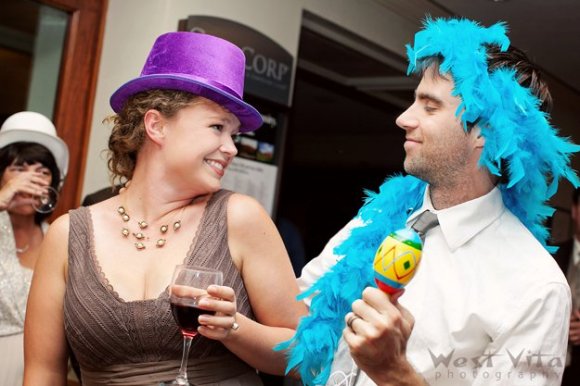
This sums up the general vibe of our marriage.

This about sums us up.

We also have our own peculiar difficulties. For instance, I am intense, and he is sensitive. He is persnickety, and I too am sensitive. Going to IKEA is a guaranteed standoff in the “basic white pendant lamp” department. We are people, sharing a life. And an interior design scheme.

Life-sharing is difficult when life is difficult. I said once, at the outset of a dating relationship, “I know I want to date this guy. But I don’t know who I want to lose a child with. Who to go with me to put my parents in a nursing home. Who to go bankrupt with.”

Life is 100% full of people, who do people-ish things and make human messes. Life has tragedy and stress. But if I summarized my life for you every day by saying, “Life is difficult,” and never spiced it up by saying “Life is rewarding,” what would you call me? A pessimist, you would call me a pessimist.

Life is way to big to be summed up in one word, and so is life-sharing. In an ordinary (the kind you have to stay in; there are other kinds) marriage you will always have ample choice of adjectives. Don’t be afraid to be thankful.

And that’s the closest thing I can think of to a universal antidote for the difficult parts of marriage: be thankful. I would be more doubtful about it, if the Bible hadn’t said it first.

The turning point in most of  Lewis’s and my conflict is when we consider the alternative: What if I didn’t have you? While making the decision about whether or not to spend money on upholstery might be simpler without him/me…who would snuggle with him/me on the reupholstered couch?

Florence and Lewis snuggling on the couch

Florence will snuggle  on the couch…which is why it needs to be reupholstered.

Marriage, the experience, can be the symphonic masterpiece with big bold moments of trust and honesty. Of vulnerability and devastation. But you have to continually maintain that thankfulness that you are on the stage, in the music. Because if you don’t– if you look at the sheet and freak out because you might mess up, or long for that bubbly Top 40 hit–then, yes, you will probably have the kind of marriage that gave me a panic attack.

Dr. Henri Krabandaum, a wise and radical man, once said to me, “I tell every young person, if you love someone so much that you would marry them, your first impulse should be to tell them never to marry you. Because you know the grief you will cause them.”

At four in the morning I storm out of bed, because I’m sleeplessly worried about a client issue, and I snap at Lewis, “Just go back to sleep!” while I slam drawers and doors looking for my bathrobe. On that morning, Dr. K is talking directly to me. I hear his voice booming in my subconscious.

He loves me on these days.

I can be hard to love.

And then, sometime later when I’m feeling ashamed, Lewis tells me, “Life is better now that I have you.”  He says “now that I have you” like we met last month, instead of 3 years ago.

So yeah, marriage is hard. The way sports or music performance is hard. But we’re still the rookies who are just so thankful to be on the stage that we wear every drop of sweat like a diamond. And that is what I want to maintain, the thankfulness.

Tagged

Last-Call Adventure: Canyon Lake Gorge

Our dear friend, Colin, is leaving us in August. He’s going to Boulder, CO (of course).

This is Colin.

This is Colin.

Lewis is sad to loose a kindred spirit. I am sad to lose one of our only friends who doesn’t think that all of my adventure ideas sound ominously fallible. In fact, Colin trumps me in great ideas that are more…grand… than anticipated.

So, in honor of his departure, we’ve begun to execute what I will here dub the Last-Call Adventures.

May 18 was Canyon Lake Gorge

This is Canyon Lake Gorge.

This is Canyon Lake Gorge.

Walking along the Canyon Lake spillway feels like a trek into a wasteland. Concrete severs the limestone in an attempt to solve a different man made problem (erosion of the man-made dam, which was built to make the lake), this scenario tends to proliferate when left unattended. Canyon Lake itself was born for flood and drought control, because German settlers insisted on inhabiting an area that is more flood-prone than anywhere else in the country. Barry Commoner might have had some thoughts on what we were setting ourselves up for here.

Lewis and Colin surveying the landscape.

Lewis and Colin surveying the landscape.

Case in point: A massive flood event in 2002 that crashed over the Canyon Lake spillway flooded homes, washed out roads, and moved enough earth to cover a football field under 30 stories of rock, soil, and flora. The flood carried such force ( 7 feet deep over the spillway at 67,000 cubic feet per second) that it ripped a giant gash in the land, exposing millenia’s worth of fossils, footprints, and geological features.

The laceration is now known as the Canyon Lake Gorge. The only way to gain access is by paying a for a tour from the Gorge Preservation Society (GPS). So that’s what we did.

Our guide was clearly a geology/archaeology enthusiast, and thus we spent the bulk of our time looking at fossils and dinosaur prints. There was also a rather excited 8 year old in our group, so fossils and dinosaurs were winning topics. However, since Colin is an environmental reporter who writes mostly about water and water issues, and Lewis is a spring fanatic, we took issue with our guide’s overall dismissal of the hydrological significance of the area. But we did learn a lot about fault lines and local dinosaurs, so the day was a most definitely a significant net gain, educationally.

The first layer of limestone to tear away under the flood waters revealed several dinosaur tracks. Personally, I buy about 70% of what any given paleontologist says on the matter because in grad school I became sort of a slave to sample sizes. However, these are undeniably footprints in the limestone, put there by the controlled fall of a bipedal creature long before several feet of limestone formed on top of it. Given the rate of limestone production in nature, the size of the print and the length of the stride…I’m convinced, and awed.

This is a very unphotogenic dinosaur footprint.

This is a very unphotogenic dinosaur footprint.

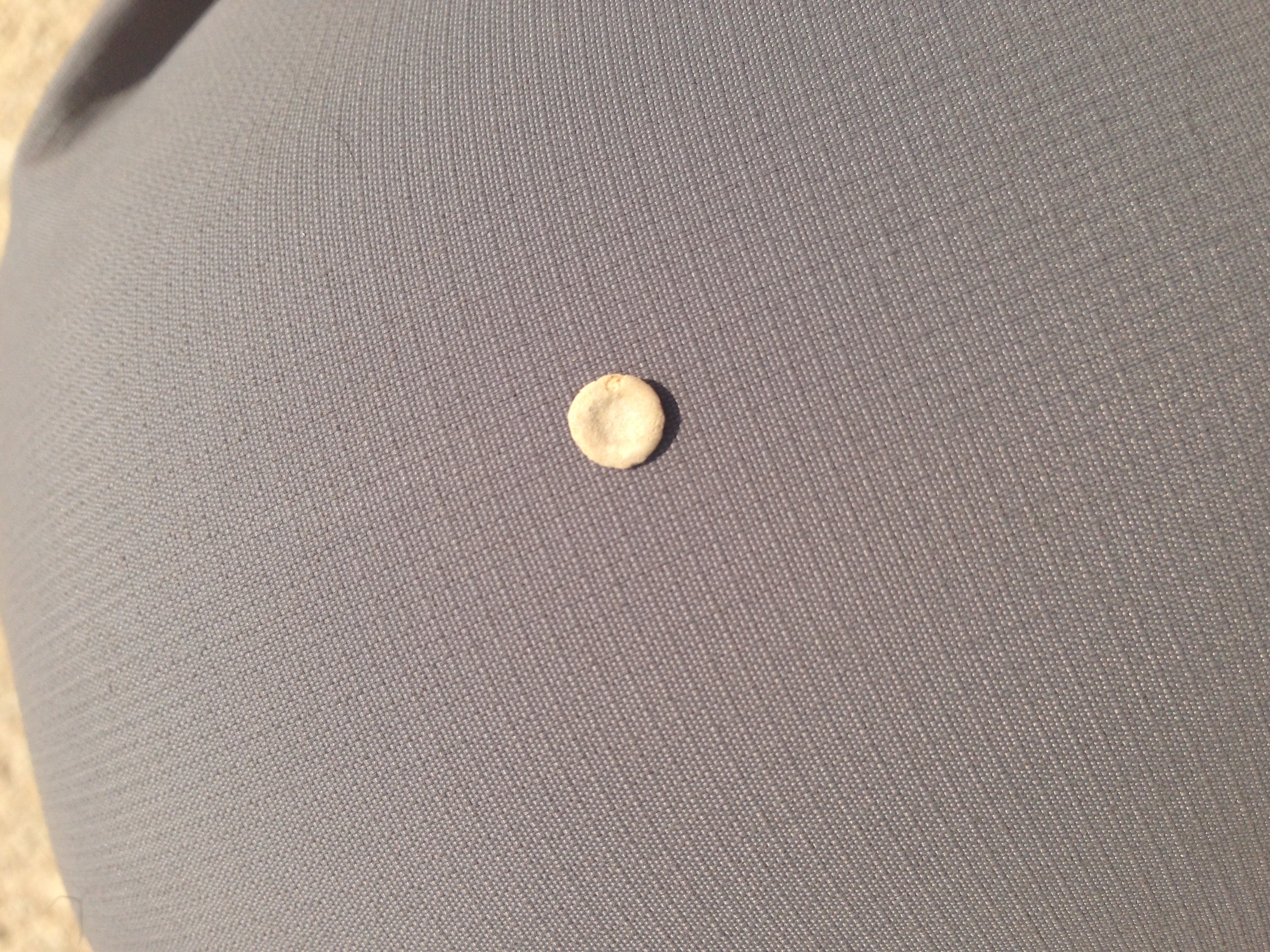
From the mega to the mini, our guide called our attention to the crunching beneath our feet and asked us to find fossils. Lo and behold the very tiny things crunching beneath our feet were, in fact, orbitolina texana. Tiny tiny fossilized forminifera (a one-celled creature with a nucleus and hole in its body).

Orbitum texana

Orbitolina texana

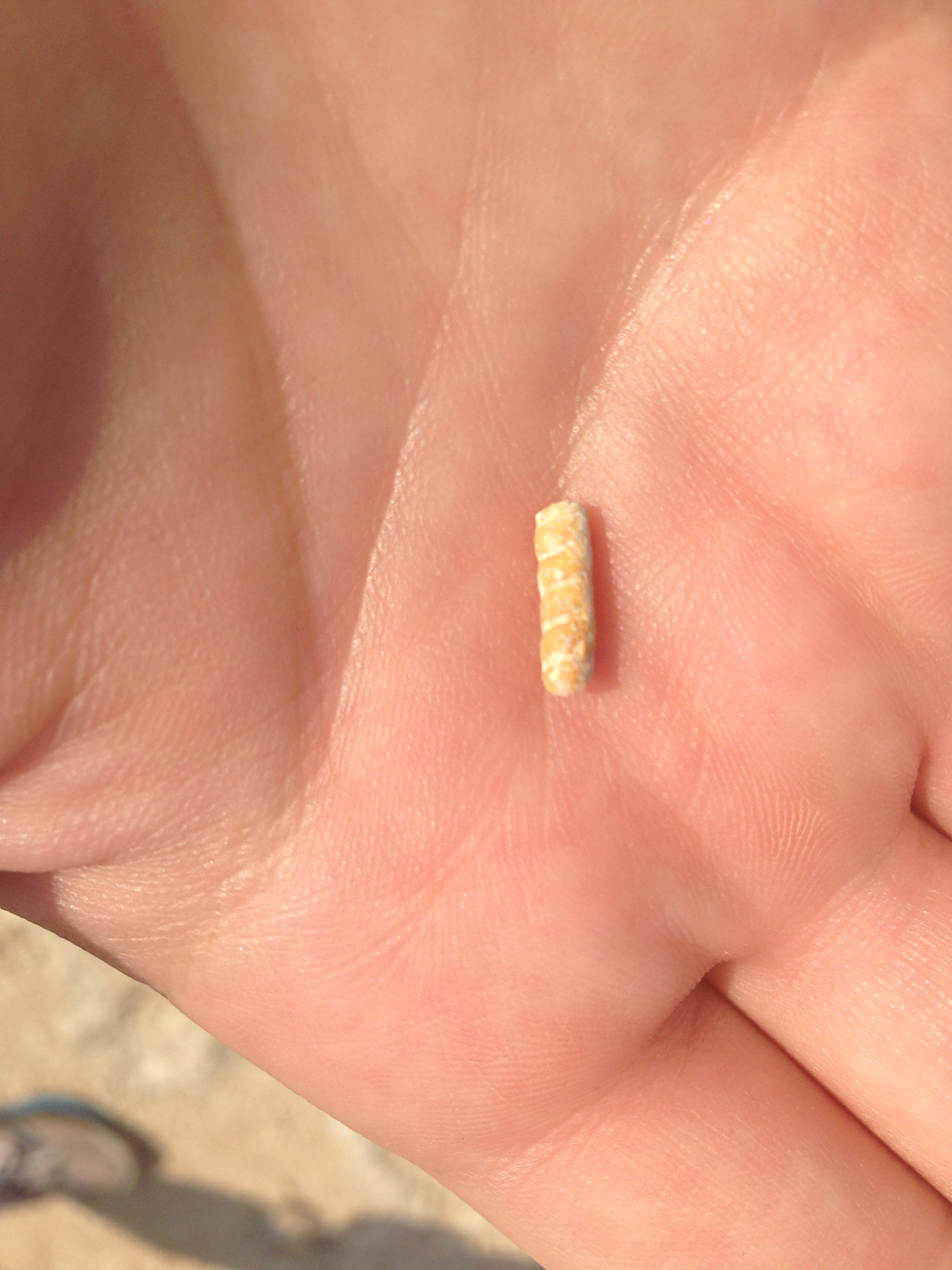
Another tiny fossil.

Another tiny fossil.

IMG_2768[1]

Crunch.

We proceeded deeper through the strata into the gorge. Each limestone shelf gave way to another stunning feature, more forensic evidence for times past and the general behavior of the earth’s crust.

IMG_2773[1] IMG_2784[1] IMG_2779[1] IMG_2790[1] IMG_2778[1] IMG_2782[1]

Limestone is porous, and so for the Edwards Aquifer dependents in the group, witnessing both the porosity and the solubility of the stone was a telling look into how we get our own water. The water in the gorge leaks out of the lake, though the porous ground, as well as underground canals carved out by persistent rivulets over time. Lots and lots of time. A similar process created the Edwards Aquifer.

Our guide lost me a little bit when he snubbed the Edwards Aquifer Authority for placing water restrictions on San Antonio to save the fountain darter, tampering with right of captures laws (I think that differentiating between surface and ground water is absurd as well, but while I’d like to see ground water protected like surface water, he’d seemed to be advocating for the reverse). He also assured us that fracking would not hurt our drinking water and that the aquifer was far deeper than we would ever need it to be. Oh the confidence of those who don’t have to drink other people’s “rights.” Except that he did spend a few minutes ranting about an ex-business partner who poured motor oil into a hole in the ground near enough to effect his private well.

This water does not belong to you.

This water does not belong to you.

We progressed to an examination of the Hidden Valley fault. The dramatic effects on the rocks as they press and jar against each other is magnificent. It looks like wreckage, and yet its presence makes rivers possible, and fills our aquifer. We also learned the term slickenside, referring to the scrape marks caused by the hanging wall (moving plate) moving against the footwall (stationary plate). I think it sounds like something you’d find at Schlitterbahn.

Under the careful explanations and occasional soap-boxing of our guide, our three hour tour matured into 4.5 hours, but even the 8 year old weathered it well. It’s an amazing place, though I am a little leery of industry building around it, even something as noble as the GPS. It just seems like when a human ties their livlihood to the whims of nature,  the battlelines are drawn. Already there are power washers involved.

I highly recommend the trip, if you are heat/sun tolerant, and fond of a good hike. Take a note from Gilligan, and don’t build your plans around a three hour tour. We lost Colin to a work commitment about 3.5 hours in. On the way out I heard the 8-year-old say, “I feel so bad for that man. He had to leave right before we got to all the fossils!” Darling, but untrue. We’d seen 3.5 hours worth of fossils. But I admire his enthusiasm for the final sites.

Fossil

Fossil

Canyon Lake Gorge, as it is now, is the museum that nature made. Her response to Canyon Lake. Her moment to show off what she’s been up to for so long before we were looking.

Tagged , , , ,

Goodnight in Old San Antonio

After six years, I gave up my booth at Night in Old San Antonio (NIOSA). This has got to be a record for shortest tenure, seeing as how the woman from whom I inherited the booth had it for something over 30 years.

And actually, I’d been trying to quit for about three years, but kept getting talked out of it. But this year, as I slid into April with my hair on fire, I knew it was the magic year. The year where I finally learned to say: “No.”

Okay…maybe “learned to say no” is a bit of a stretch. But when I do finally scream “nooooo!!!!” in desperation, or cut someone off in traffic accidentally, or put my foot in my mouth I have learned to say: Eh…they’ll get over it.

So I quit NIOSA, a massive fundraiser for a cause that I affirm, the San Antonio Conservation Society. While I believe in their end goal, the event wasn’t something I could throw my whole self into anymore. For more on that, see my article in the Rivard Report.

I have stared out of that booth for 133 hours. Five and one half days. In all of that time, these were the highlights:

1) In the beginning, I was very…VERY into the whole thing. This photo was taken my first year in the booth, when I was 24 and kept company with primarily college students and single people. Back when stumbling home exhausted and sticky and smelling of beer was super cool. Back when I had a job that started at noon.

Liz and Bekah NIOSA

photo credit: Nell Glazener-Cooney

photo credit: Nell Glazener-Cooney

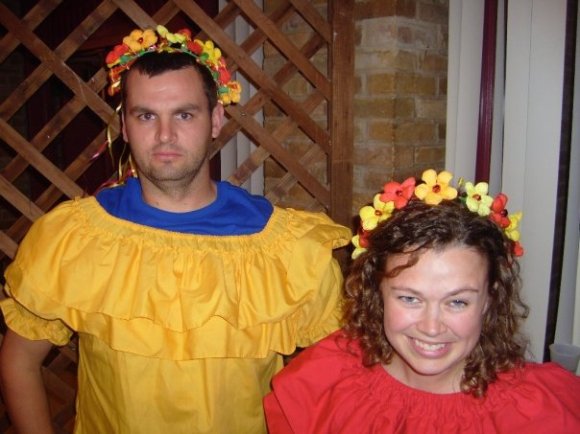
2) Nothing delighted me more than the men who would come by the booth in the drunking hour… not to see me. Dress a man up in a frilly blouse and a corona and you’ll have a line out the door.

Twinsies

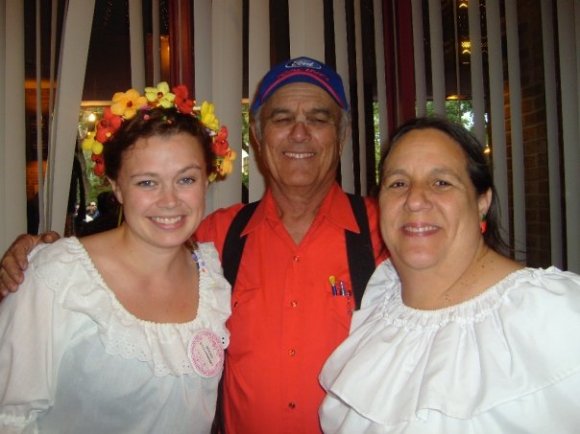
3) I had many faithful helpers over the years. Becky Meyers, Justin Clement, the Behams, a whole host of Trinity Students who worked a shift every single year they were in school. But by far, the Volunteer of the Years(s) award goes to these two. I inherited them with the booth. They were the only thing that made it possible the last two years (when I had a job that didn’t observe “NIOSA week” as a holiday).

Rusty and Diana

4) I have a whole philosophy on Big Red, thanks to NIOSA’s contract with the RC Company and their refusal to sell Coca Cola or Pepsi Products. Here were some of the greatest quotes to come out of Cold Drinks #2.

THE “You didn’t do so well on multiple choice tests, did you?” CONVERSATION

Customer: You don’t have Coke?

Me: No. We only have RC products.

Customer: Pepsi?IMG_2491[1]

Me: No. We only have RC Products.

Customer: Dr. Pepper?

Me: No.

Customer: Diet Coke?

Me: No.

Customer: Okay, I’ll take a Big Red.

THE “What the hell is your 7 year old doing here on a school night?” CONVERSATION

Customer at 9:30pm: Do you have anything without caffiene?

Me: 7-Up

Customer’s Kid: I hate 7-UP!

Customer: Okay, he’ll take a Big Red.

THE “This is why America is obese” CONVERSATION

Customer: Do you have water?

Me: No.

Customer: Okay, I’ll take a Big Red.

Me: *blank stare*

I was beginning to believe that people only ordered Big Red as a last resort (which would mean that the four other drinks we served were beyond hope). But then there was this conversation, the year we decided to use the booth as a public health research venue.

Customer: I’ll take a Big Red.

Lewis: Here you go sir. And if you don’t mind my asking,  how often would you say you drink Big Red?

Customer: Most of the time.

Lewis: *blank stare*

5) I am pretty sure that NIOSA is the single most significant thing I have ever done (six times) to/for my immune system.

IMG_2521[1]

6) Lewis coming along was a major change for my relationship with the booth. It was the beginning of a new time…a time when being irrationally tired had relational consequences.

I think the Conservation Society secretly knew this, and thus employed their prerogative as the arbiters of preservation. My maiden name (and the endless volunteer energy that went with it) is apparently one of the many monuments worth saving. 2013, when this picture was taken, was my 3rd NIOSA with the last name “McNeel.”

IMG_2497[1]

7) Whether it was the very earnest cloggers, or the wildly inappropriate “flasher” character that roved the dancefloor, the booth was never lacking in spectacle to observe. Of course, the perennial favorite of drunk festival-goers across the Anglo-German world is the Chicken Dance.

IMG_2524[1]

We kept a yearly tally of how many times the chicken dance was played.

8) The whole event has this sort of mom-n-pop feel to it. No one bothers with new-fangled conveniences like computers or health codes. So you can’t help but wonder how much money it could possibly make.

Millions, or more appropriately, tons.  One trip to the ticket weighing station underneath the booth at Sauerkraut Bend, and you see that these moms and pops are nobody’s fools.

About 5% of the nightly spoils. Each of those tickets is worth 50 cents.

About 3% of the nightly spoils. Each of those tickets is worth 50 cents.

9) Odd as it is, perhaps the thing I’ll miss the most is walk out, after it’s all over. There is no moodier light than the fading of a heat lamp. No more melancholy sound than the last of the revelry 100 feet ahead of you. No more atmospheric icon than the trash and debris of the party covered in confetti. It would have been easy for my last walk out of NIOSA to be a nostalgic, bittersweet moment…but then someone spilled beer on my shoe and nearly poked me in the eye with their sausage skewer…

IMG_2532[1] IMG_2533[1]

We Planted a Tree [Part I]

This is our sapling Taxodium mucronatum:

IMG_2569[1]

Among the many cool CPS Energy programs, the tree giveaway is my favorite. It’s hard to get super jazzed about Energy Star Appliance rebates, and Enegy Saver Home Management, even though we appreciate them. But free trees? Hoo-RAY!

As the sole utilities provider for San Antonio, it’s good to see them give back. I heard someone make an argument for benevolent dictatorships once, and that sort of how I feel about CPS. In theory, I’m a fan of choice. In reality, I like CPS, and would probably choose them anyway. If being a monopoly allows them to give away trees, I’m not so terribly opposed.

I even found myself standing in Woodlawn Lake Park’s Earth Day celebration handing out free CPS trees to Westside residents. At the beginning of the day they could choose between such drought tolerant and attractive Texas natives as Eve’s Necklace, Mexican Buckeye, Redbuds, Possumhaw Holly, and more. As the day wore on, the choices narrowed considerably, until all that was left were Possumhaws and an entire grove of Montezuma Cypress.

Throughout the morning, two master naturalists carried an ongoing discussion as to whether or not Montezuma Cypress trees, which typically grow along rivers banks, were actually drought tolerant. If indeed they are not, then the middle of the bone-dry Westside in the middle of the 3rd worst drought in the city’s history might not bode well for the survival of the Montezumas.

(According to Wikipedia…they are both drought tolerant and usually found in riparian areas.)

At any rate, their audible debate did not bode well for marketing the Montezumas. So at the end of the day, I eyed the remaining saplings, looking like little Charlie Brown Christmas trees, and thought, “Well, kids, one of you has got to survive.”

I happen to have access to a creek on my husband’s family ranch. Gallagher Ranch is a fine specimen of the Edwards recharge zone, and this has just the sort of springs and soils in which cypress trees thrive. Whether or not Montezumas can actually flourish in any Westside back yard may be up for debate, but on the banks of San Geronimo Creek they seem to do quite well.

So on a Friday night Lewis and I headed out to the ranch with out friend Liz and her pack of dogs. We walked the creek bed until we found the perfect place.

IMG_2546[1]

IMG_2558[1]

Lewis dug the hole.

IMG_2570[1]

We set the tree in.

IMG_2572[1]

I covered his roots. (I’m posing here…this is not the posture of someone actually shoveling.)

IMG_2578[1]

Now we will hopefully watch him grow.

IMG_2580[1]

If you’ve never planted a tree, I highly recommend it. I could wax on about the poetry of the experience, but I think that would only muck up it’s utility and grace. There are times where the poetry is in the doing, not the reflecting. Planting trees is one of those things.

I will only say this. Trees are so much simpler than people and politics. They take nutrients and they grow. They give back in predictable ways. They do what they do because of what they are, not how they feel or what they think. I know that it’s our magnificent minds and souls that separate us from the rest of the natural world…but trees have got something going for them. They live by the immortal creed: “It’s not how you look when you’re doin’ what you’re doin’. It’s what you’re doin’ when you’re doin’ what you look like you’re doin’.”

Tagged , ,

Something New and Good : Easter and Earth Day

“Give me something I can touch.”

It started in London at a St. Paul’s Ash Wednesday Service. There was something sobering and meaningful about feeling the ashes smeared across my forehead. That was actually the first time I paid attention to the tangibles of the faith.

After that I paid more attention to communion as well. The taste of wine and feel of bread. The cold pewter of the common cup against my lower lip. Faith often doesn’t feel real. We need something, even a small and symbolic something, to touch.

This is me, very happy, with St. Paul's behind me.

This is me, very happy, with St. Paul’s behind me.

Another famous English church experience was responsible for my awakening to a love of liturgical worship. Evensong at Cambridge Cathedral was a profound moment of worship not based on warm feelings or sentimentality. It was my first real experience of a sacred moment that had very little to do with my personal feelings, and much more to do with the sights, sounds, and air in the space.

Lent is when I feel my faith the most. Not “feel” emotionally, but “feel” in the Pat the Bunny sense. With my fingers. Christians aren’t supposed to need that. We’re supposed to be all about the “evidence of things not seen.”

But I need something I can touch. I can touch the earth.

Evolution is the ape in the room when faith and nature meet for lunch. When we force the choice between literal 6-day Creationism and Neo-Darwinian materialism, we must either close our eyes or deny our souls.

So many Christians opt to keep their eyes closed, or to fight data with dogma. We allowed the twentieth century to galvanize our faith into this cumbersome, rigid, behemoth must be authoritative on any matter, or it will shatter into a million pieces. So suddenly the Bible bears the burden of being a science text book.

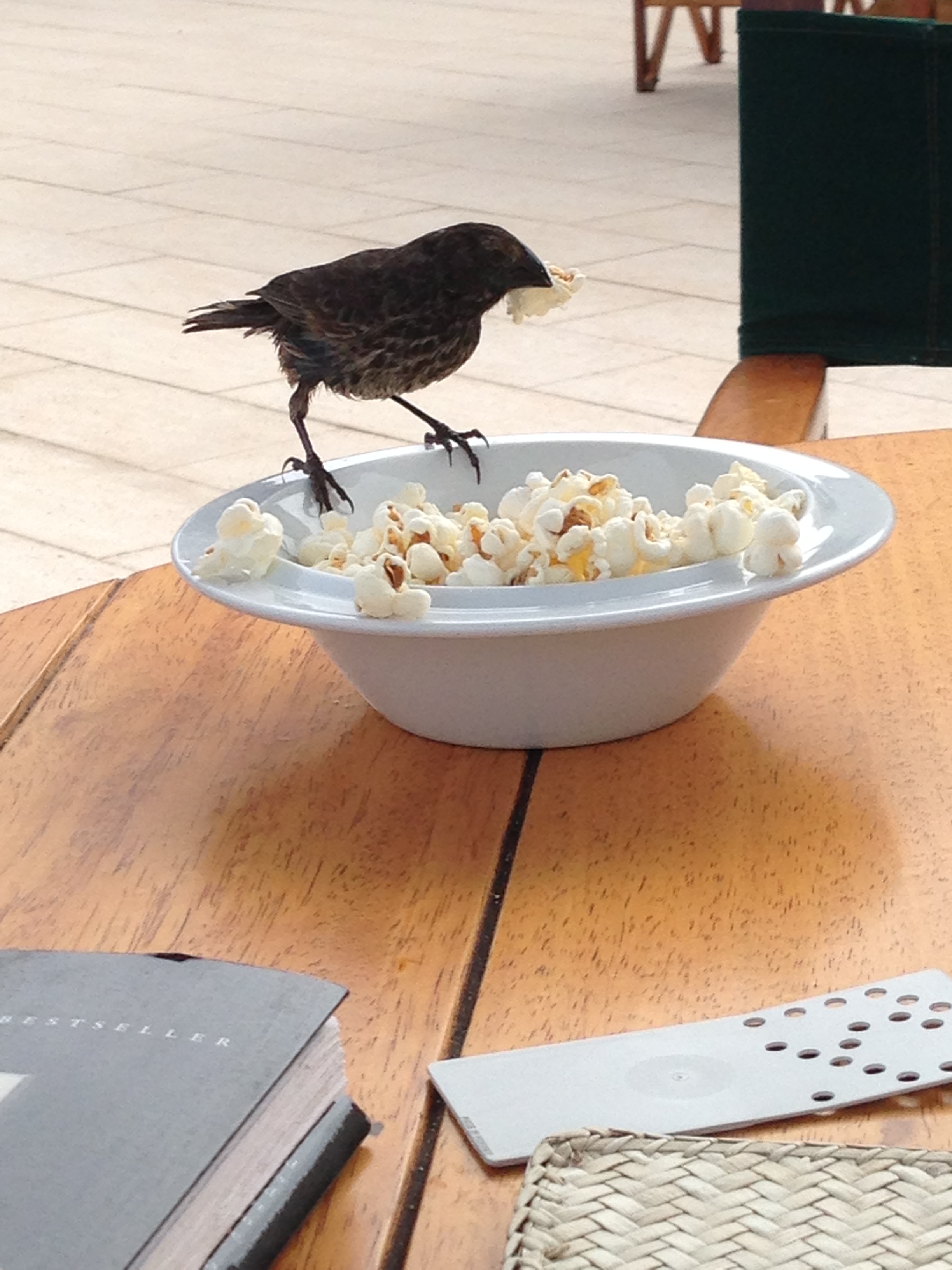
The finch shares my popcorn.

The finch shares my popcorn.

Or we take the Don Draper (and now Peggy Olson) approach. “If you don’t like what’s being said, change the conversation.” We can’t make nature jive with the Bible, so we just turn our attention elsewhere. We make the earth a lesser thing.

But I see things. I hear things. I feel things with my nerve endings, not just my emotions. I see things with my eyes, not just my reason.  I want a faith that fearlessly affirms discovery and understanding of the things we can touch, as much as the things we cannot.

So it was especially appropriate this year that I ended up in the Galápagos, “evolution’s workshop” for Easter…or Pasqua, as it became.

I had ignored Lent this year, coincidentally. For the first time since my British awakening, I did not give anything up. I did not seek out Ash Wednesday or Maundy Thursday. My intangible emotions were in full revolt against all things sacred.

Then, in a twist of divine brilliance, work sent me to the Puerto Ayora on Santa Cruz Island for the holiday. My hotel was down the street from the Darwin Research Station. Darwin’s finches shared my Easter lunch.

And I was forced to answer the question: can I simultaneously believe in what is happening here and what happened 2,000 years ago? Here they are observing evolution in the beaks of finches. Can this possibly jive with a risen Jesus and a spiritual world?

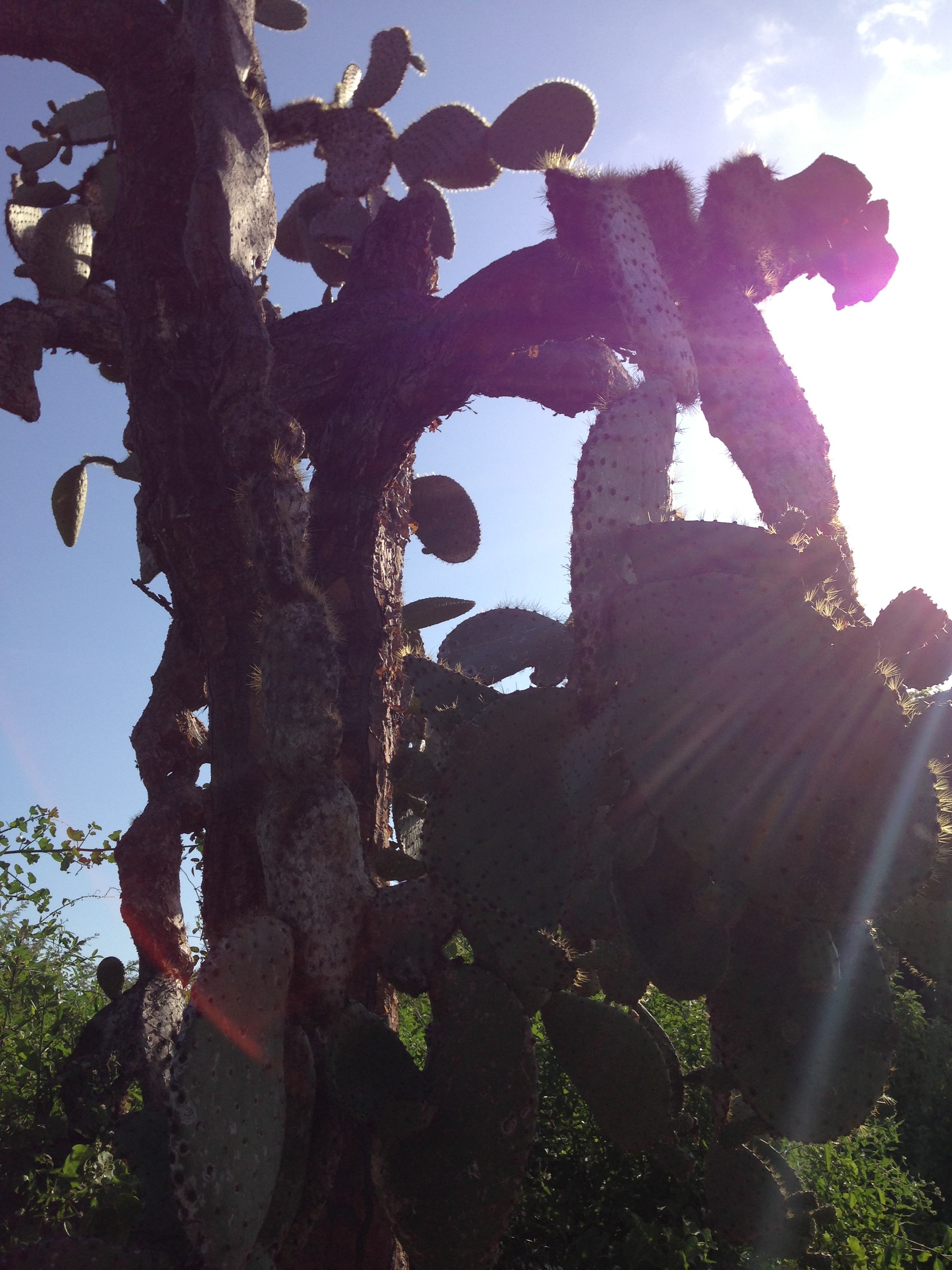
Watching the magnificent frigate bird with his red ballon gular sac, and the Galápagos Prickly Pear Cactus Tree with its uncanny structure, I considered the Easter story.Why was it so important that Jesus rose physically? Why not just send the Holy Spirit from the cross and skip straight to Pentacost?

Because our physical selves matter. The physical world where we see flowers, hear birdsongs, and taste ceviche. Someone else understood that too.

“Give me something I can touch.”

Thomas. Had Jesus not been there with physical wounds, Thomas would have been lost. Thomas’s needs are more familiar to me now than ever. In a sense he was saying, “I’m going to need something more than their words. I’m going to need something more real than the physical realities of death. Give me something I can’t deny.”IMPORT March 2013 073

Jesus has not been as obliging with me as he was with Thomas. Instead he gave me Galápagos Easter. If every time I touch the earth I do not have to go to war in my soul, then I can live without touching Christ’s wounds.

The moment I was set free to the natural world I can’t deny and the faith I cannot bear to lose, it was as though the earth burst forth in song. Sun glinting through the prickly pear tree looked like the Cambridge Cathedral. Leaves and dirt and water felt like the ashes on my forehead.

I, for one, want a faith that goes to the Galápagos without fear of being dismantled. Rather than a porcelain mastodon that must stay safe and polished, I want a dynamic sapling that stretches and grows toward the light as it soaks up nourishment from the earth.  I want to celebrate Easter and Earth Day – when we celebrate the things we can touch.

Tagged , , , , , , , , ,

Something New and Good : Transition

Someone wise recently told me that I was in a time of transition. The end of one calling, a complete reconsideration of my gifts/strengths/interests/opportunities.

Another wise person – to whom I happen to be married – recently told me that I am over-committed. He told me this as I stumbled to bed at midnight, still checking email on my phone. Even though I did roll my eyes and explain that I’ve been that way since he married me– I’ve been that way since high school, in fact– he has a point.  I’ve got fingers in a lot of pies, eyes on the horizon, ear to the ground, toes in the water, nose to the grind stone…and still unsure of where me heart is. I see this as a symptom of being in transition.

My Professional Identity: Dora the Explorer

My Professional Identity: Dora the Explorer

Do we all imagine that our late 20’s will be the time when our roots are spreading and we’re finally gaining momentum and focus in the dream life we have achieved? Or was that just me?

Late twenties transition is different than that initial real-world jolt. When we were 23 and 24 we were all freaking out together. We were all poor and disillusioned (because it was 2008, so really everyone was poor and disillusioned  but the 23-24-year-olds could still pull off the look). No one really had much.

Now we’ve got stuff, to varying degrees. I have friends who are nearing their 5 year anniversaries at the same firm, 7 years of marriage to the same person, and they have kids who are older than my own marriage and job. But then again…I do have a husband and a good job. And a mortgage. So, it’s not really like being 23.

It’s like being 29 and in transition.

In some ways it’s inevitable, because a woman’s late 20’s are prime time for babies, promotions, distance running PRs, and establishing oneself as a political entity. Those all get in the way of each other as is. Add in “re-starting half your life” and, well…yeah.

I’m not naive enough to think I can have it all or do it all. But while the music swells and the temperature rises…I’m not ready to plant my flag on the shore and say, “This is who I am…now…for real this time…never mind last time.”

Whether we call it transition or chronic over-commitment, here’s the lay of the land in this strange new world…

Evidence of Life Transition in One’s Late 20s

(Millennial Generation Edition)

1) Another woman cleans your house…and her car is nicer than yours.

2) Public parks, check-out lines, and bars are places to answer emails. But NOT movie theaters. Some things are still sacred.

3) You have a growing closet of Patagonia clothing because it’s versatile enough to merit the price tag. By versatile I mean that it looks ready-to-go without looking already-been.

4) You have five email addresses and use them all frequently. Sometimes you use the wrong ones, and people begin referring to you by your college nickname in professional settings.

I care about these two beasts.

I care about these two beasts.

5) Your less attentive family members have no idea what you do for fun vs. what you do for work. You’re like Chandler Bing on Friends, crossed with Sydney Bristow from Alias (and because you are in your late 20’s you get those references).

6)  You look at maps and if you can’t bike or walk there, you are very resistant to the idea of going at all. Why? Because it’s probably the only exercise you are going to get…and your car has no air-conditioning, bumper, or driver-side door handle. It looks hip to pull up sweaty on a bike. Not so much when your brakes alert everyone to your arrival.

7) Your phone accompanies you to dinner. But you still hear your mother’s sarcastic chiding, “Wow, you must be important. Expecting a call from the President?”

And you respond…”Actually, Mom-in-my-head, the fact that my phone is at the table tells you precisely how unimportant I am. Important people don’t have to take calls at dinner.”

A friend once made a similar observation about how many keys are on one’s keyring. As you climb the ladder of life you gain keys as you gain access to more and more responsibilities. Then one day, you trade all those in for one master key. And at the top level you simply expect doors to be unlocked in anticipation of your arrival.

8) You have dogs. Plural. And a yard. And if it weren’t for your spouse/partner/roommate they would all be dead. I, for one, currently have four more living things to care for than I ever anticipated. The one that does not whine gets neglected. Sorry, yard.

Also, I said dogs intentionally. Cats do not count. Anyone can care for a cat. College students can care for cats, and they can barely care for themselves. Cats will survive the apocalypse, and they can survive owners under 25.

9) You start spending more money on skin care, which you justify by spending less money on iTunes.

10) Your husband asks, “Do we have anything going this weekend?” And you say “No! It should be totally relaxing.” Then he’s totally baffled when the alarm goes off at 6 am on Saturday, and your parting words are, “I’ll be back in time to change for the symphony. Don’t forget to drop by community garden workday and the dry cleaners.”

In all seriousness, transition is a weird time. The wise man who identified my own transition also gave me the advice that I’m trying really hard to follow: don’t cut it short.

When we were young we frequented the swimming holes of the Edward’s Plateau. Limestone caves were everywhere, and many times the entrances were underwater. You had to hold your breath and swim into the darkness trusting that the person who told you about it was right in that it was only a 15 second swim before you reached an air pocket or cavern on the other side.

Pop up too early and you bashed your head and sucked in water when you gasped. But if you could hold your breath until you sensed that you were through the mouth of the cave, the caverns on the other side were magical.

Tagged , , , , , ,

Fiesta Time!

Fiesta is here! Never mind that downtown is about to become an absurd gridlock of bleachers, confetti, and carnival food. I love this time of year!

I love color. I love revelry. I love living downtown.

Viva Fiesta!

Houston and Alamo

Houston and Alamo

IMG_2380[1]

The Fiesta Store on Main

IMG_2382[1]

On Broadway, heading into downtown


IMG_2387[1]

Little House on the Eastside gets dressed for the party!

IMG_2393[1]

Even Emma likes Fiesta

IMG_2392[1]

Wiley oversees "Natural Fiesta" in the back yard.

Wiley oversees “Natural Fiesta” in the back yard.

Tagged , , , ,

Something New and Good : Requiem

 My sister and her husband were living in my grandparents’ old house. The alarm, which had not been turned on for literally over a decade suddenly went off for no apparent reason. It was loud (which upsets my sister), and it was relentless. My brother in law tried turning it off, dismantling it, and disconnecting it, and still it screamed.

Suddenly he turned, and there was my sister, who had been outside calling relatives to try to figure out the alarm code. She was holding heavy duty scissors and wearing her game-over face. With no pause for discussion, she took a handful of the freshly exposed wires and cut straight through them. The alarm stopped. She handed the severed hardware to her husband and walked away. The alarm is turned off in a permanent way.

That’s what happened to me and God-talk.

Once upon a time, my faith was easy for me to talk about. I loved going to conferences on topics like “the church” or “the Church” or “this thing called church.” I could worship pretty freely in most settings (I say most because of my weird squeamishness in charismatic services). Nothing got me jazzed like a good theological debate or the inside jokes that only Bible students can access. I wanted to live my life in the semantic fray of those who would decide what is most important to Jesus, and what’s really wrong with the world.

And then came a concentrated series of misunderstandings, hurt feelings, and disappointments that made corporate worship and spiritual intimacy almost unbearable. The language of these misunderstandings was the language of my faith. The words that hurt my feelings cut straight to my identity, because they were words of my faith. The disappointments knocked the wind out of me all the more because they were delivered in the same language I had used to pin my hopes to the church.

The words that had been my life now sound like death to me.

The music, the memes, the tropes, and the catchphrases of Christianity feel like itchy wool on the blistering summer of my heart. So it has been with a fair amount of desperation that I’ve been hunting for sounds that don’t make me cringe or want to hide. Right now, that means going to the symphony.

IMG_2373[1]

I love the San Antonio Symphony for a lot of reasons. It is one of the greatly generous organizations in this city, responsible for the lion’s share of high culture in our notoriously casual cultural scene.

In addition to this general goodness, it was responsible for my deepest experience of Christmas. In its space I found some of my few moments of reverential stillness. Most recently, the San Antonio Symphony delivered a requiem for my former self (not that they had any idea they were doing any of this).

Last weekend the San Antonio Symphony, San Antonio Mastersingers, Trinity University choir, and UTSA choir performed Verdi’s Requiem, and they did so with a grandeur I had never seen from this group of hard-working and humble musicians. Trumpets in the mezzanine. Bass drums. Super-titles. My lungs were vibrating behind my ribs from the sound waves, and my soul shook somewhere deep my guts.

In the wake of the explosions at the Boston Marathon, the shootings at Sandy Hook, and Kermit Gosnell’s house of horrors, and the millions of lesser injustices we witness every day, we should all appreciate the need for songs of grief and cries for mercy. The concert was universal and personal in a way we often forget that we need. Not to compare my grief with the victims of tragedy, but simply to point out that death has many faces, and no paltry words or chords can match it.

Verdi was not a man of public faith, but he used the requiem format – a sung funerary mass from the Catholic church – to honor deceased friends and a common political ambition of a unified Italy. He was skeptical of the church, and yet the power of a private devotion wasn’t lost on him. His distrust did not run so deep that he would abandon the vocabulary of faith. Instead he made it beautiful by composing one of the finest pieces of music to carry it past the ears and into the soul, past the cynical guards who kept the words themselves at bay.

I can relate.

As I listened, four soloists and three choirs delivered the haunting words of the Kyrie, Agnus Dei, Sanctus, Lacrimosa, Lux Aeterna, and the rest until finally the Libera Me, which literally means Deliver Me. The words were displayed on supertitles, but I didn’t need them to know that this terrifying and haunting beauty was at once the death mass for who I thought I would be, and a reminder of why I’m still tangled up in this tattered and sweat soaked faith of mine.

I’m not who I was. Not headed in the same direction, not in the company I used to keep. And the gulf grows greater every day.

It’s difficult to worship. It’s difficult to talk about my faith, or to hear others talk about the faith we share. But it is not difficult to hear beautiful music. Music that makes me want to join when it sings, “May eternal light shine upon them, O Lord, with Thy saints forever, for Thou art good.”

Tagged , , , ,

Explorer’s challenge: Five climate zones in 15 days

I pride myself on being a good packer. Or at least in having chosen an excellent convertible carry-on/backpack suitcase once upon a time. Two weeks in Africa, no sweat. Forty days in Europe, easy. This summer it was my moble mueble carrying not only clothing but plastic plates, utensils, and basic groceries as I lived three days per week at a hotel in Katy.

This last trip, however, may have stretched my trusty sidekick to its limit. He’s still going strong, zipper works, wheels roll, handle retracts. But my creative packing and his elasticity we going full throttle as I packed for my trip through Peru and Ecuador. First off, it was a business trip, so I needed to have the ability to look nice, should the situation present itself. I would also be hiking, snorkeling, city-touring, and boating. But the most complicated element:  I would be traveling through six climate zones, which I will here below grossly oversimplify.

#1 Coastal Desert

“It never rains in Lima,” said the man driving us from the airport to our hotel in Miraflores. We would hear this exact sentence 3 more times before we left Peru.

FAM trip 018

Nonetheless, there were puddles on our terrace in the morning.

Lima’s coastal desert climate is a product of the Humboldt Current, which keeps it temperate (60s in their winter, 70s in their summer) and foggy. In my opinion, humidity makes all weather feel more extreme, so add 10 degrees to the heat index for summer and add “cold sweat” to the winter forecast. It’s a humid place, even if it rarely comes to fruition.  Most of their <2 inches of “rain” every year, like our puddles, are actually condensation from the dense fog called the garúa.  

The closest thing Lima has to crazy weather are El Niño events, when the Humboldt Current warms up and they have a heat wave. But that wasnt’ happening when we were there, so I have to say, Lima was easy to outfit.

#2 Sierra- Andean Valley

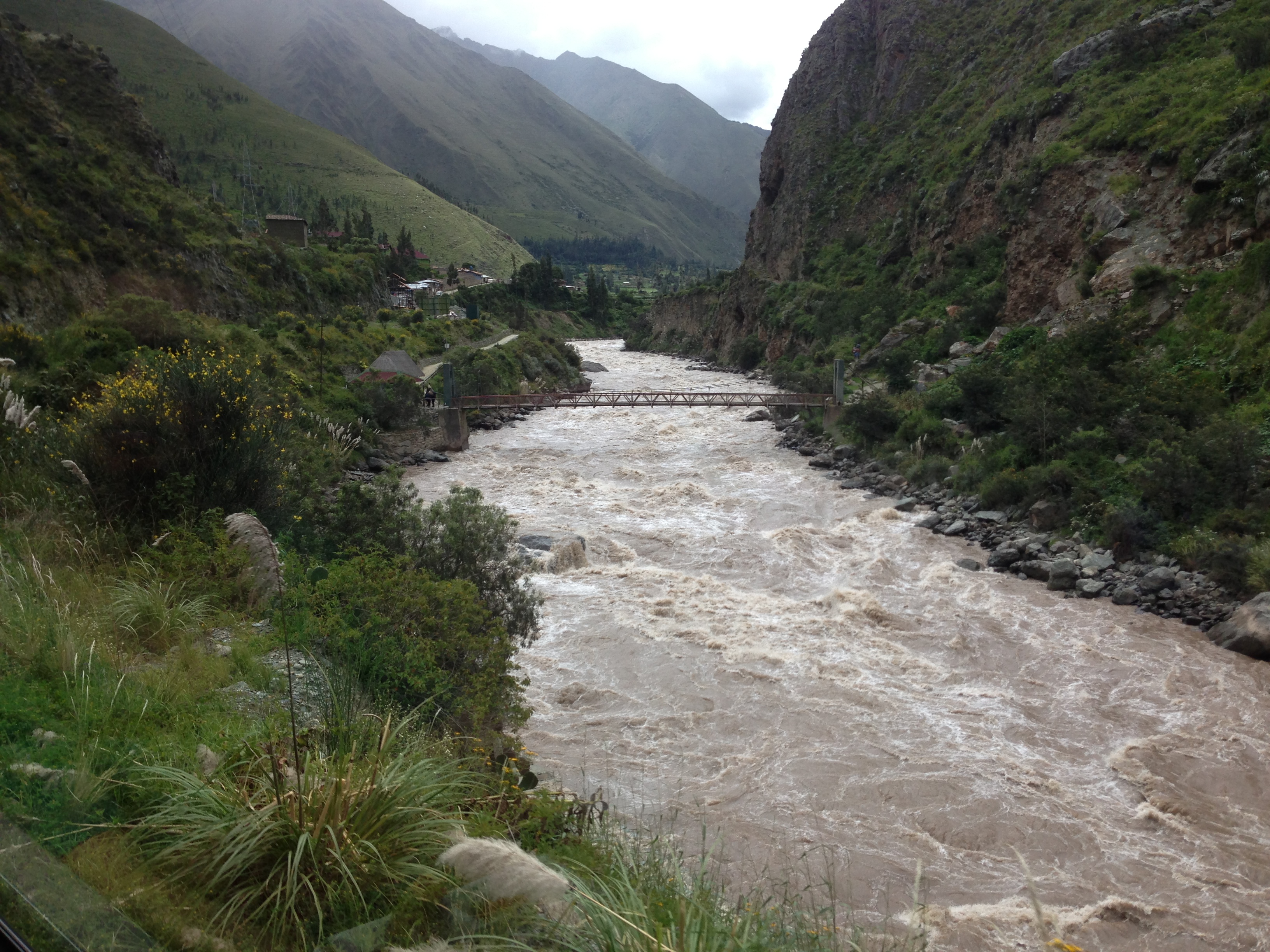
The Sacred Valley and Machu Picchu are often lumped together in terms of climate. In fact good luck finding an online resource to say otherwise. However, thanks to the windows of the Vistadome, we watched as bromelia replaces agave, opportunistically sprouting on trees and rocks, while the agave ran out of personal space. The polite and orderly mountain flora is overtaken by aggressive and lusty Amazonia.

FAM trip 076

FAM trip 175

The true Andean Valley is ideal for agriculture. Temperate, predictably dry, then torrentially wet November-February.

Aguas Calientes and Machu Picchu are exploding with life. It’s everywhere, and while rain and dryness are equally predictable, there’s an added something in the air that covers the Citadel with clouds and the rooftops with jungles of lichens.

FAM trip 237

FAM trip 199

#3 Sierra – Andean Highlands

Again, the highlands are often lumped in with the Sacred Valley and Machu Picchu, but anyone who has had to budget their long-sleeves and short sleeves know that this is simply not true.

Cusco is cold. Technically we were there in the summer time and I’m wearing a jacket in most of the pictures. Also, this has nothing to do with the climate, but the air is also terribly thin, so everything is out of whack when it comes to dealing with the climate. You’re cold, you’re panting, you’re dizzy, you’re thirsty.

FAM trip 281

I have no idea what grows and lives naturally in Cusco, because we never left the heart of the city, or strayed from it’s concrete arteries.

#3 Selva – Amazon

This might have been our most dramatic transition. From chilly Cusco to Puerto Maldonado where the highs and humidity were in the 90s. We never stopped sweating. Fortunately, our mood was somehow improved by this, and Lewis concluded, “We’re just happier when we’re sweating.”

Never thought I’d hear that said about me.

FAM trip 347

FAM trip 360

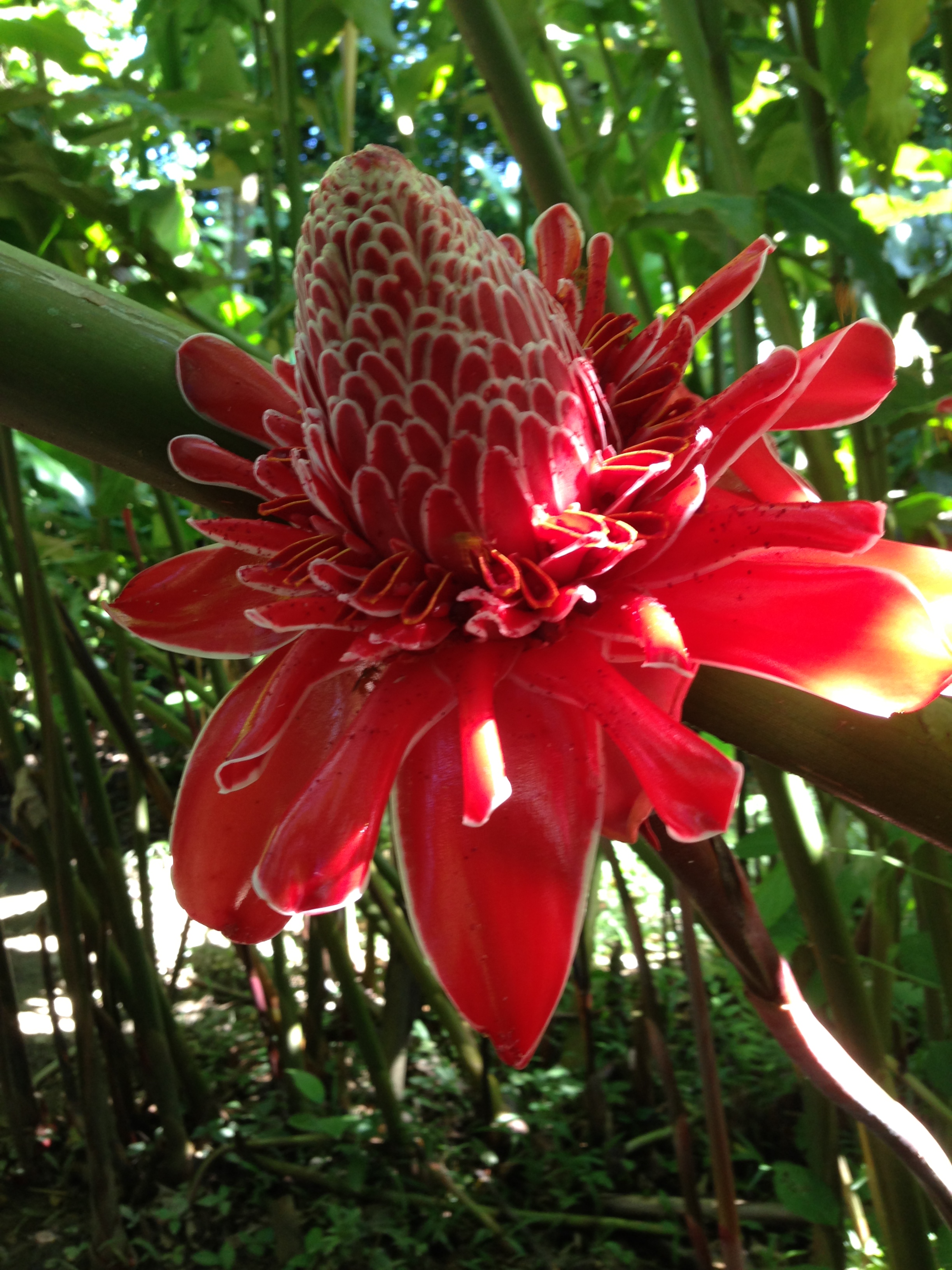
The Amazon is fascinating. The soil is nutrient poor, and so things grow quickly with shallow roots dog piling on top of one another. In some cases, like the banana tree, they are productive for about three years, and then they are gone. So few develop into hardwoods that our naturalist guide made a point to call attention to almost every single one we passed.

In the explosion of life, competition is fierce, and so everything is brighter and bolder than it would be in a world where there were enough of things to go around. Flowers need to attract pollinators, and you don’t waste your energy getting all magnificent if there’s no need to impress anyone. It also means that bacteria, mold, infestation and decay happen more rapidly. Everywhere you look, there is life…and it’s all fighting for the same small space.

FAM trip 379

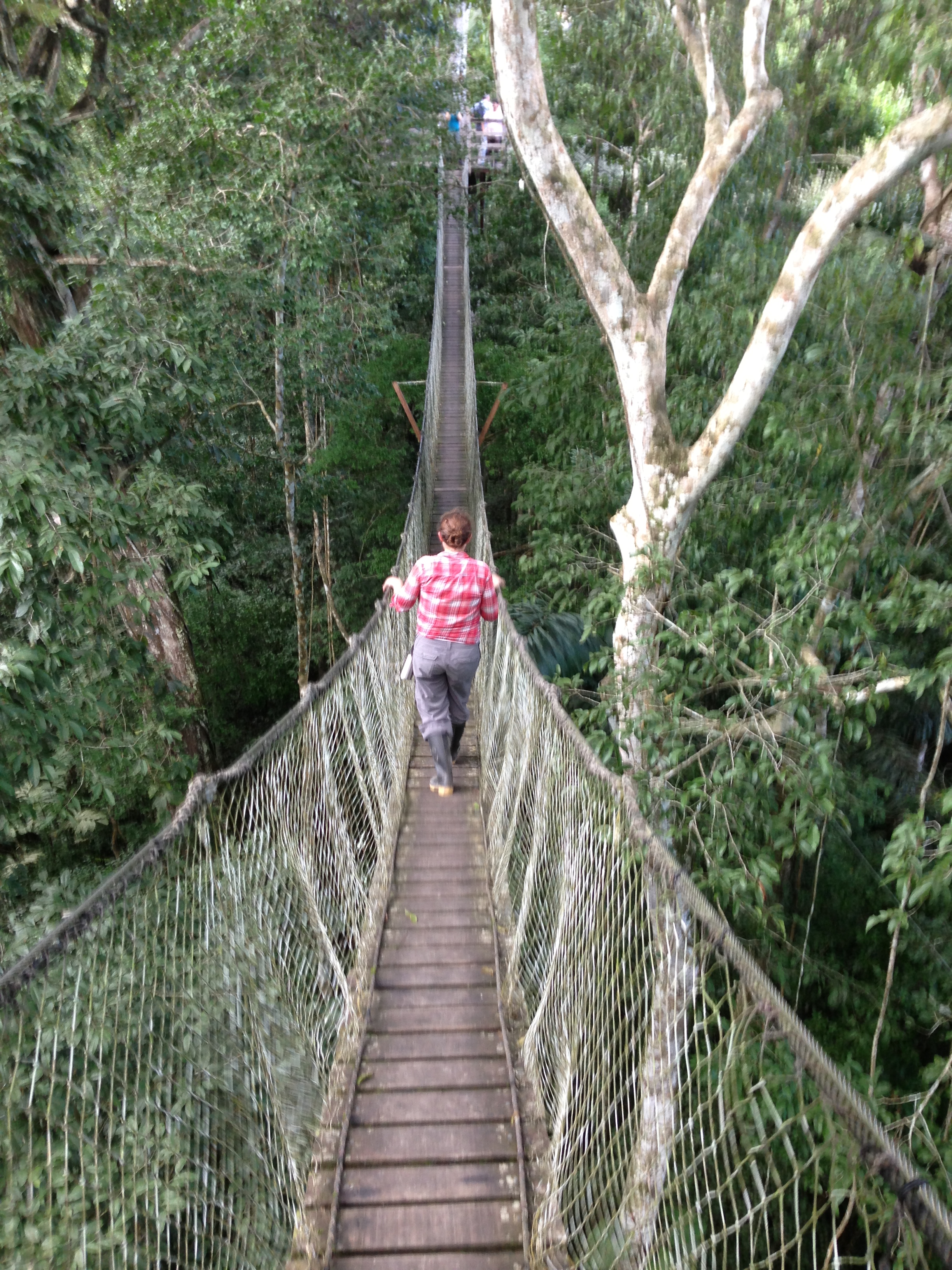
Four (some say five) layers, each it’s own system of relationships and bioeconomics, make up the rainforest. The herbacious floor, with life piled upon life and the detritovores coat the ground and speed decay. Next layer up are the shrubs and short trees of the shady understory, which provide shelter to much of the forest fauna. Next up is the canopy, which can only be explored by binocular or ingenuity, as it is both dense and impossibly high. The emergent layer are those survivors who hover even above the canopy, like the Jetsons.

Those last two layers, the canopy and the emergent layer are made of primary forest. Old growth. These are the treasures of the forest that have survived mold, parasite, and competition for light and nutrients. These are the mighty men of the rainforest. And they can’t be quickly replaced.

FAM trip 363

#4 Galapagos

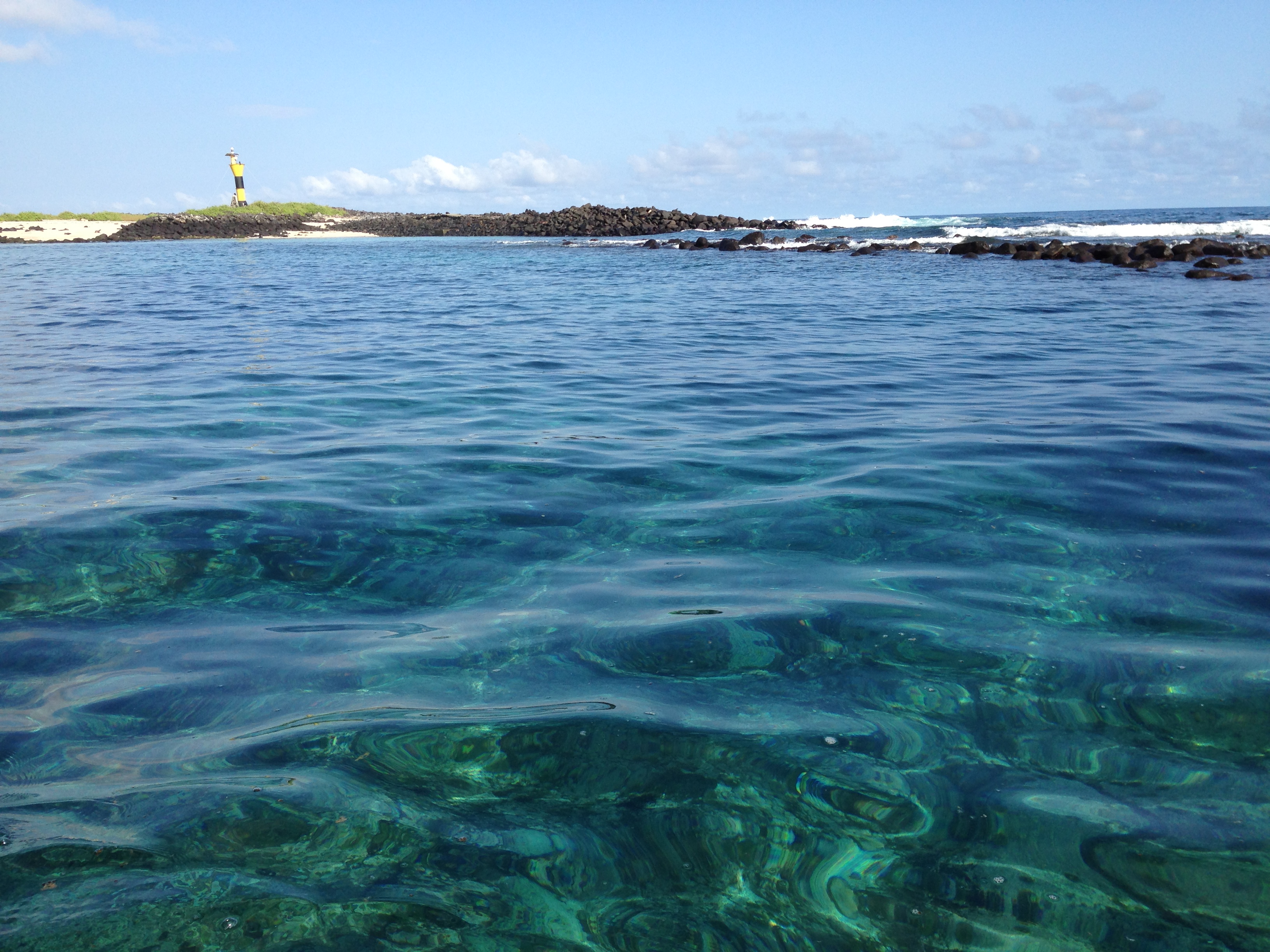
I had soaked through most of our warm weather clothes by the time we got to the Galapagos. Fortunately March, while it is the hottest month, is the best time for snorkeling, so I could wear my bathing suit most of the day.

But there were the morning hikes, during which I would wear slightly smelling post-Amazon explorer attire and give it 20 minutes until they were drenched anew under the unforgiving sun of 10am on Española Island.

FAM trip 441

The Galapagos, like the coast, is dependent on the currents for it’s seasons. Humbolt, June through November, brings dry air and wetsuit weather to the waters, particularly on the western islands. Panama Current brings wet summer, peaking in March, when hiking is best reserved for the hours of 5am-9am. Which is what we did.

FAM trip 442

FAM trip 465

Every few years El Niño comes and starves the islands, which are devoid of fresh water resources. Without rain, the volcanic rocks just bake, along with everything on them.

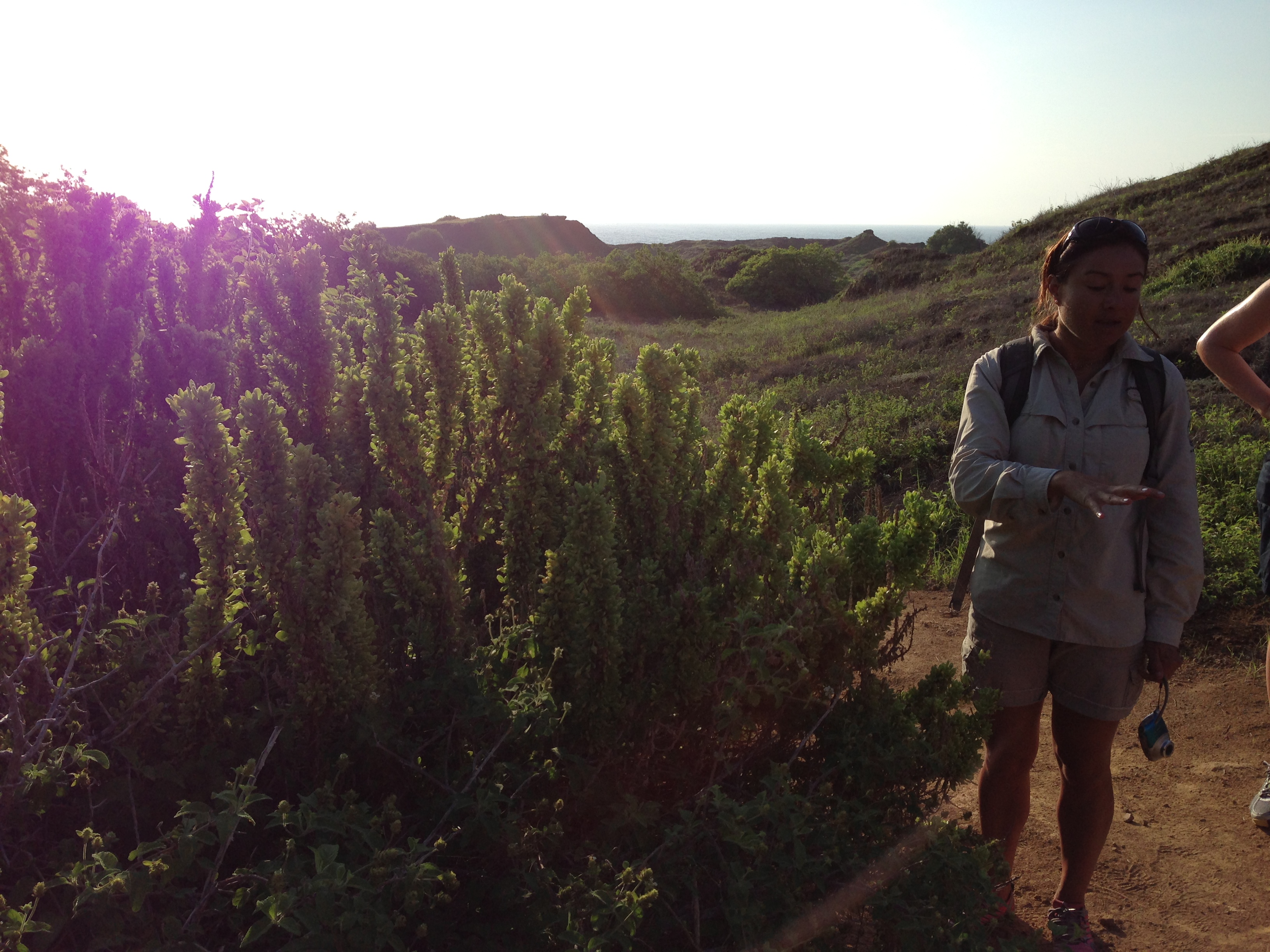
Being volcanic, the rocks hold almost no nutrients, and host desert plants like sesuvium and prickly pear (which impressed even this Texas girl by growing into trees…). Their iconic tree, the ever-adaptable endemic scalesia grows across the climate zones, including the highlands of Santa Cruz where it shares space with a wider variety of short but dense vegetation.

FAM trip 463

Odd as it may seem, this remote and exotic world felt the most familiar, as far as my skin was concerned. August in San Antonio has a tropical desert element to it.

#5 Páramo

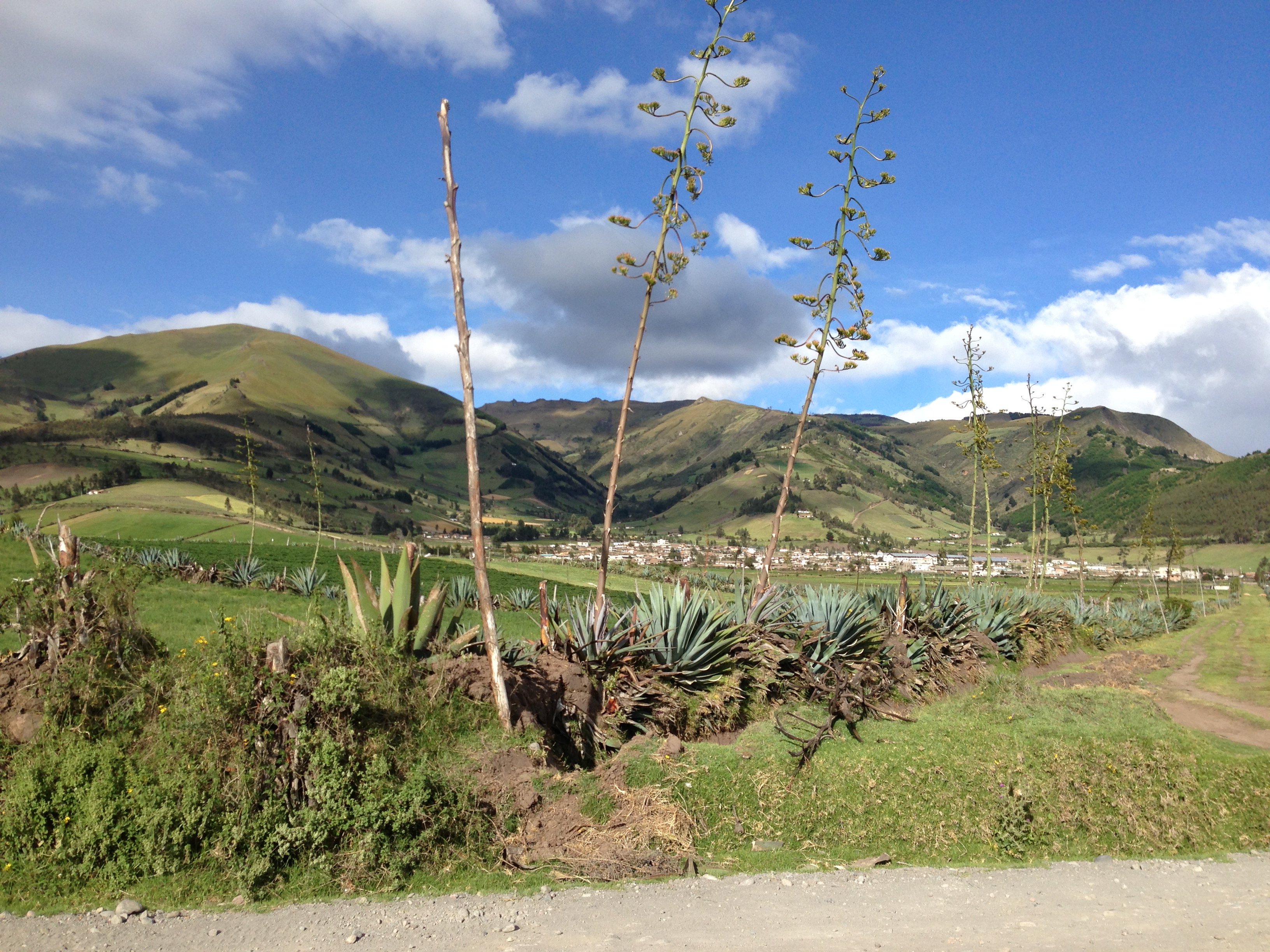
My favorite climate region was the one we visited last. Nestled between the continuous treeline and the snowline along the equatorial Andes lies the páramo. Cold and humid, pretty much year round and simultaneously home to delicate flowers, hummingbirds, and evergreens.

FAM trip 533

The mid 60’s temperatures were welcome, as we were all out of warm weather clothes that didn’t smell like a gym floor.

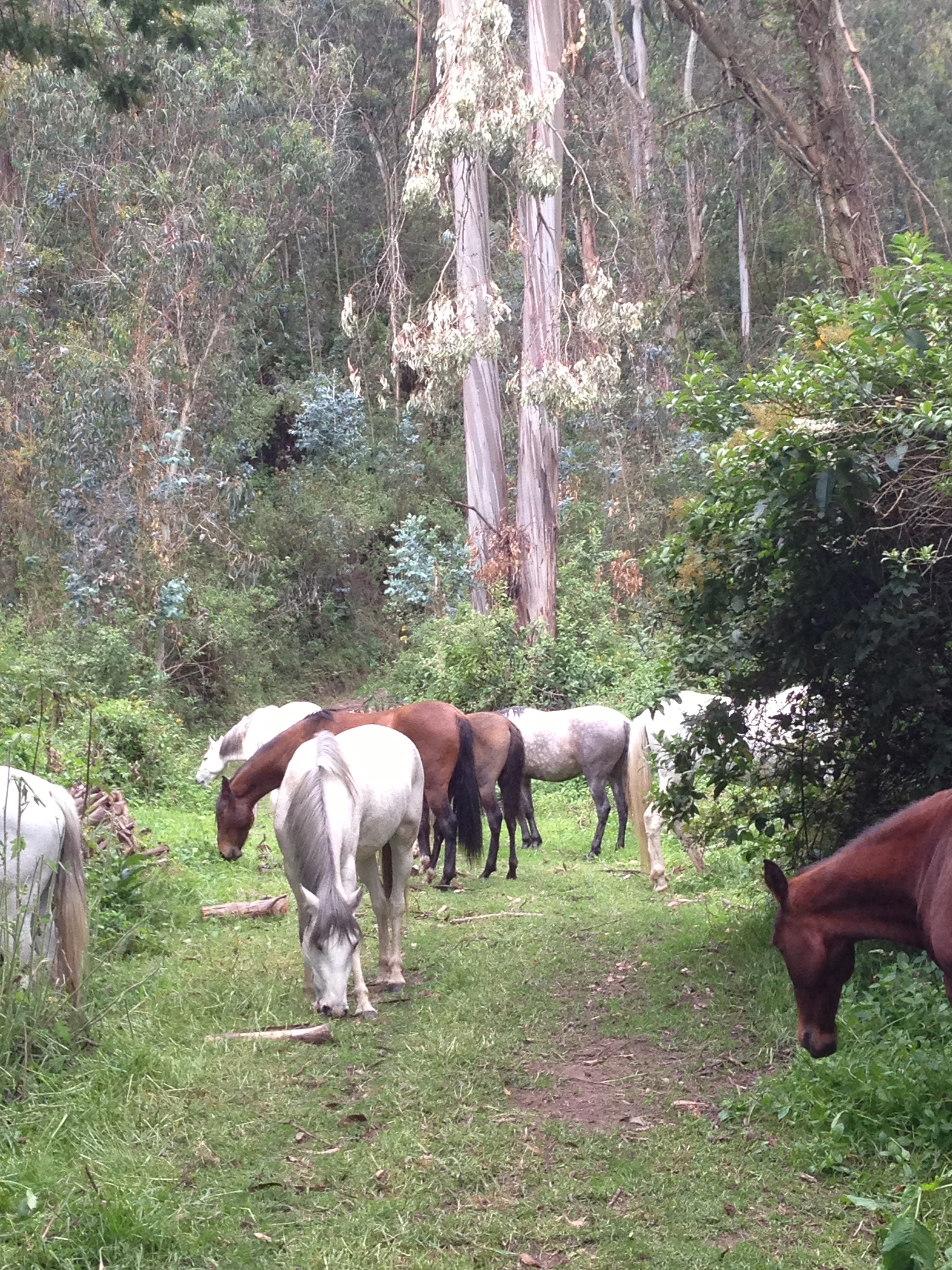
We hiked all day, visited the Andean condor rehab center, and sat down to dinner fresh faced and still smelling nicely. The crops were not particularly diverse in the páramo, but the dairy production was devine, and the cows looked happy with their lot in life. They should be, at least, as the scenery in the Zuleta region is nothing short of breathtaking.

FAM trip 656

If I had it to do over again, I’d spend two weeks in each location. No question. But as a survey, I left me utterly convinced that South America holds more natural wonders than anywhere else I’ve seen, and I hope that they know it, protect it, and stand by it.

Tagged , , ,

Nature’s Hallelujah: The Galápagos

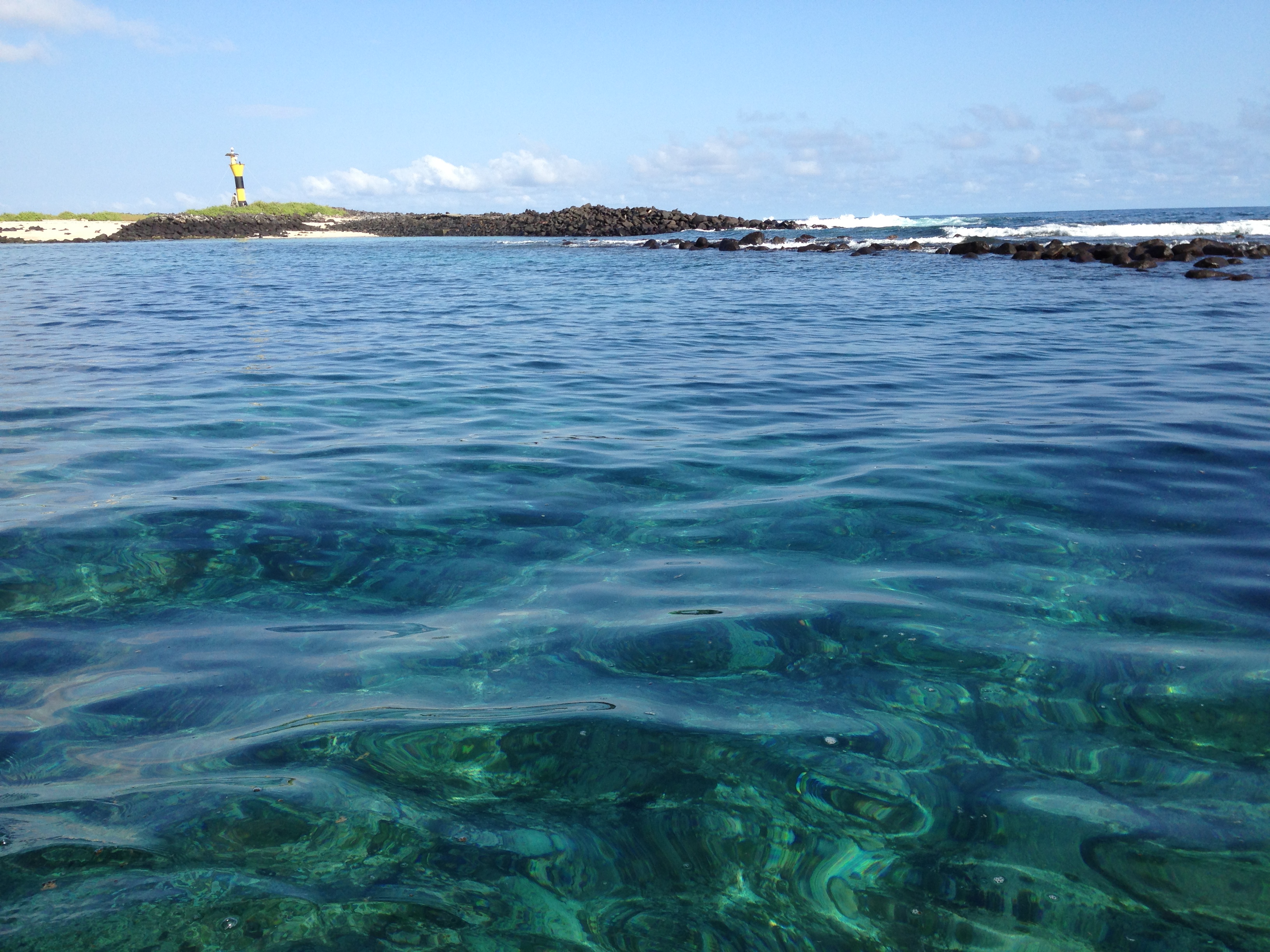
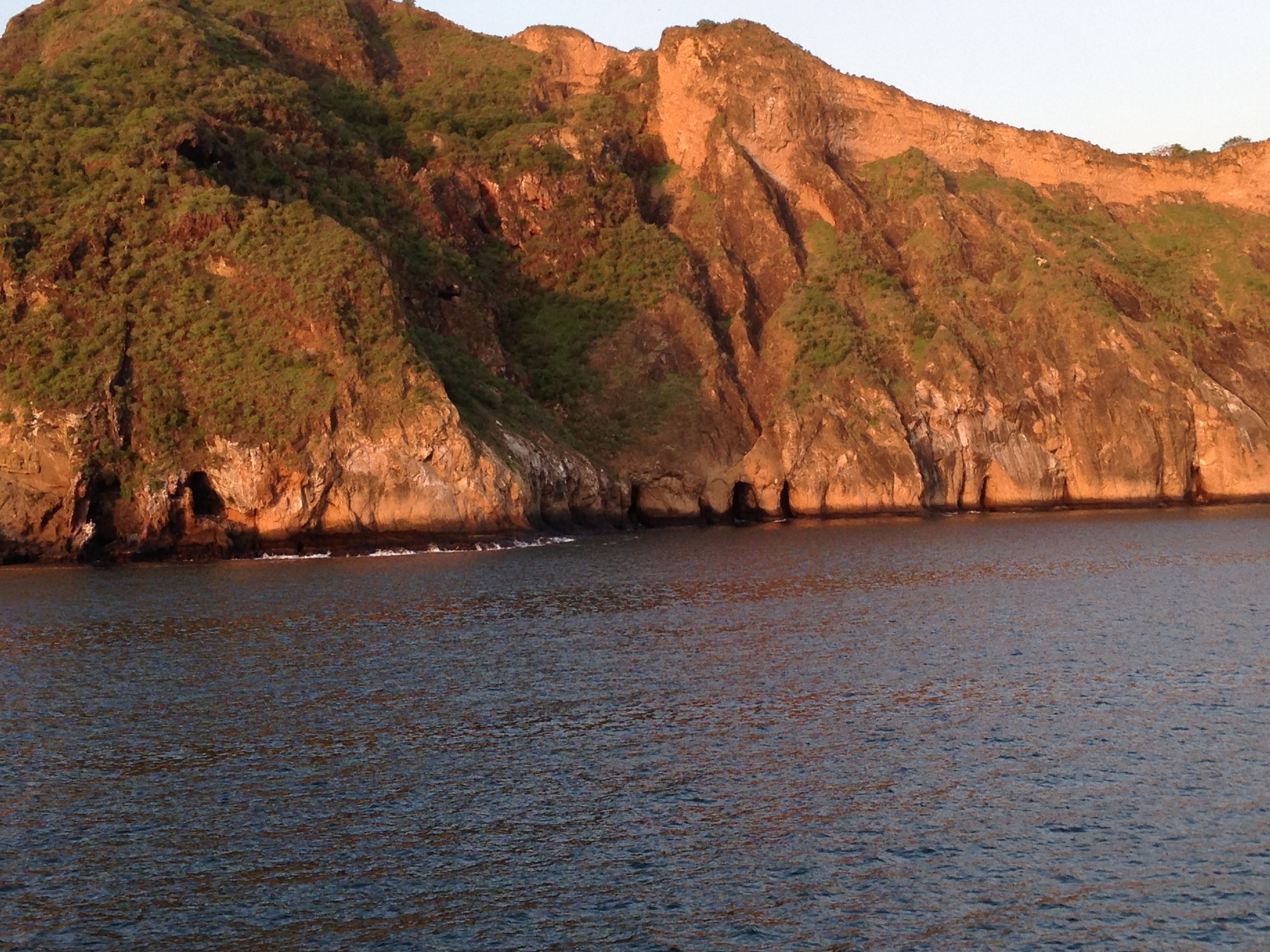
As our panga neared a formation called “The Cathedral” at Cerro Brujo on San Cristobal island, I had mixed emotions. I was in awe, watching Kicker Rock appear and disappear as the waves batted us to and fro. I was also perplexed. How could anyone have ever sailed these waters and failed to realize the beauty of places like Cerro Brujo?

Blow hole on Española

Blow hole on Española

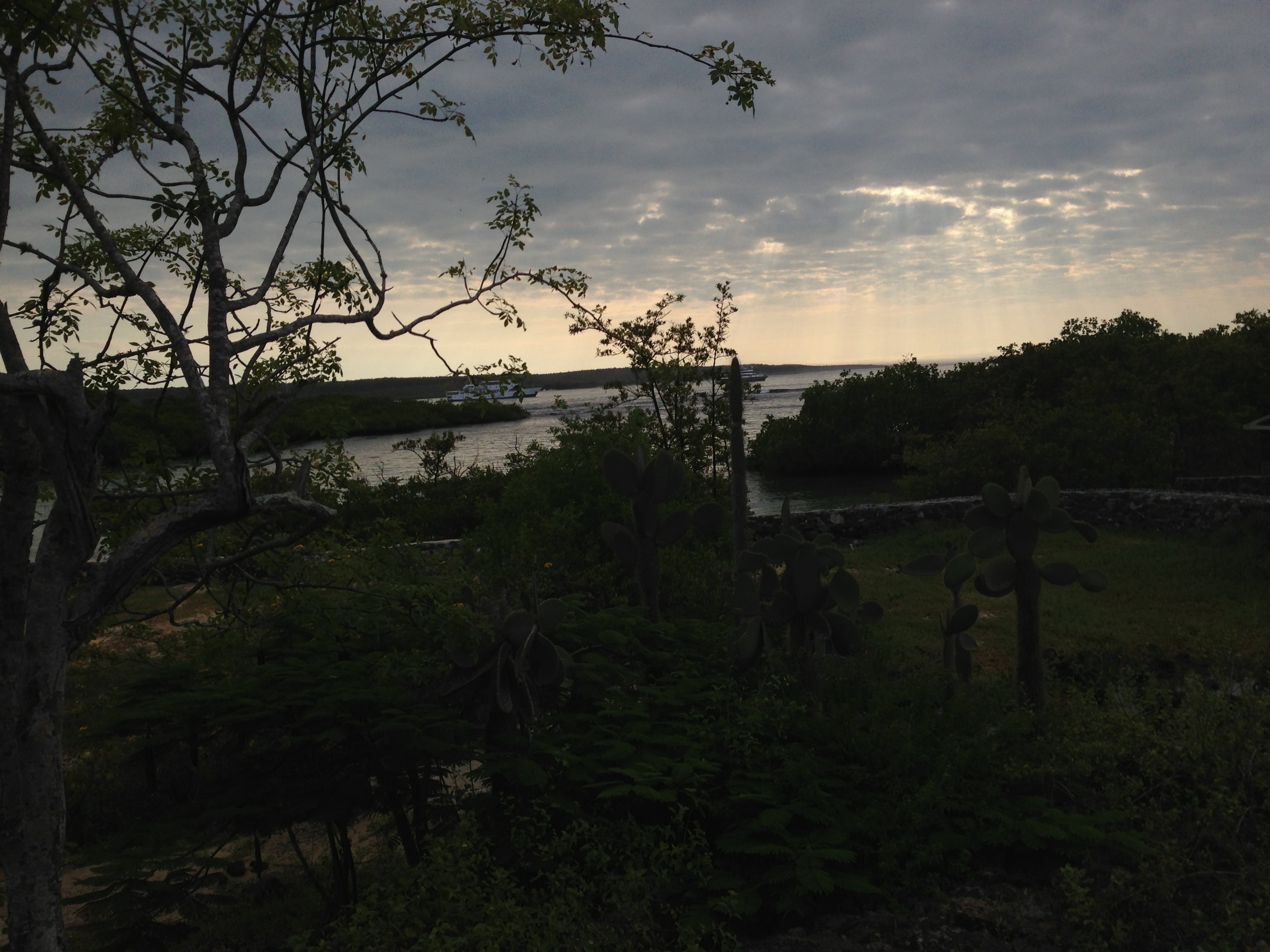
Sunrise from a balcony on Santa Cruz

Sunrise from a balcony on Santa Cruz

During the heady moment of imperial expansion, European powers planted their flags in just about every type of soil in the world. They mined, they conquered, they spread their germs and culture with liberality across most terrains. But upon reaching the Galápagos, yet unnamed, they found nothing to mine. No one to conquer. Nothing to take home. And so they called the islands cursed.

FAM trip 465

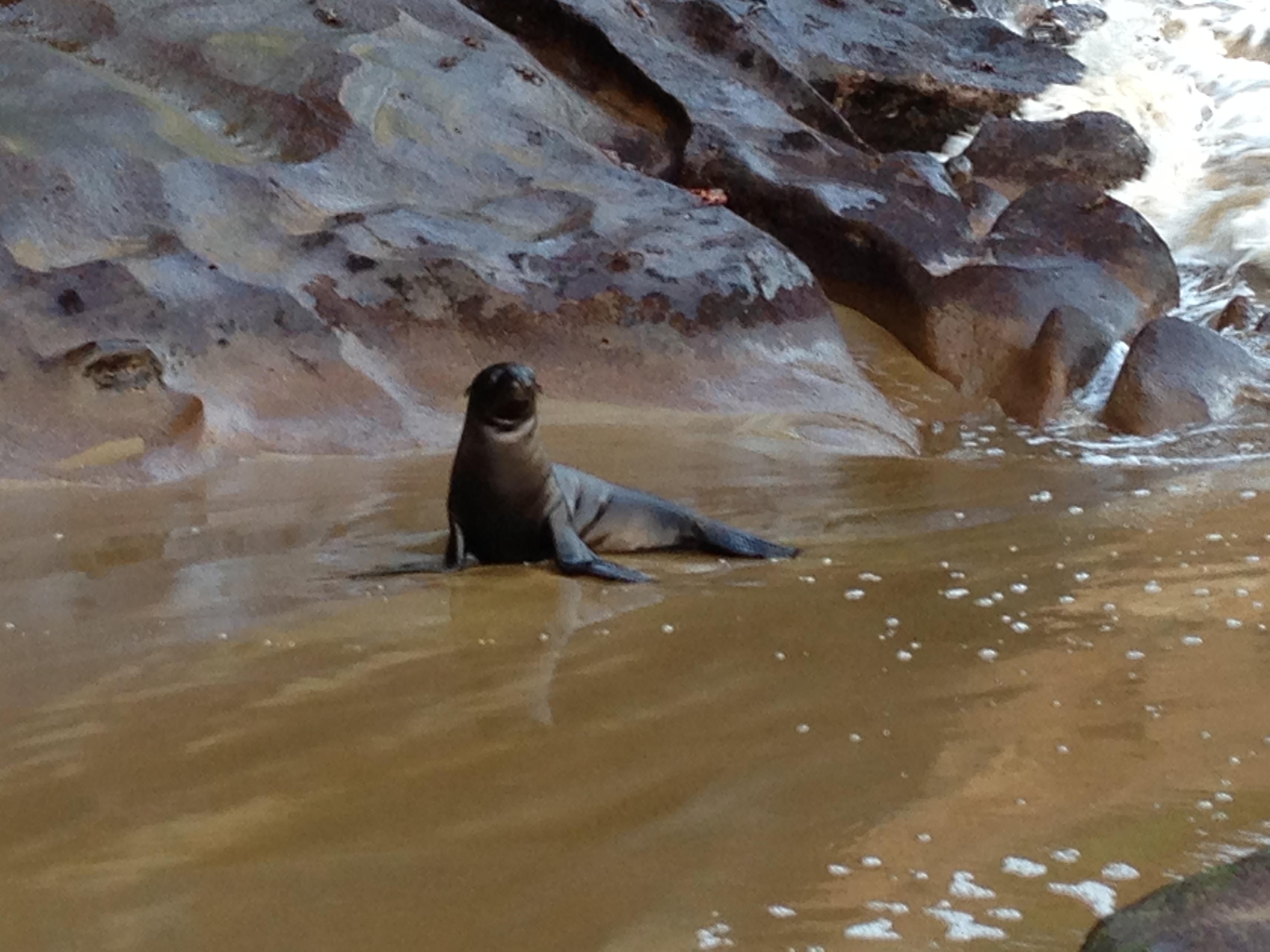
Baby sea lion at Punta Pitt, San Cristobal

Baby sea lion at Punta Pitt, San Cristobal

The “Islas Encantadas” of the South American pacific would suffer through the middle ages under the worldview that nature’s singular purpose was to illustrate Biblical principals to mankind. Bacon and his lot didn’t help either, because usefulness as the measure of value did not change the status of the volcanic islands, void of fresh water and edible vegetation.

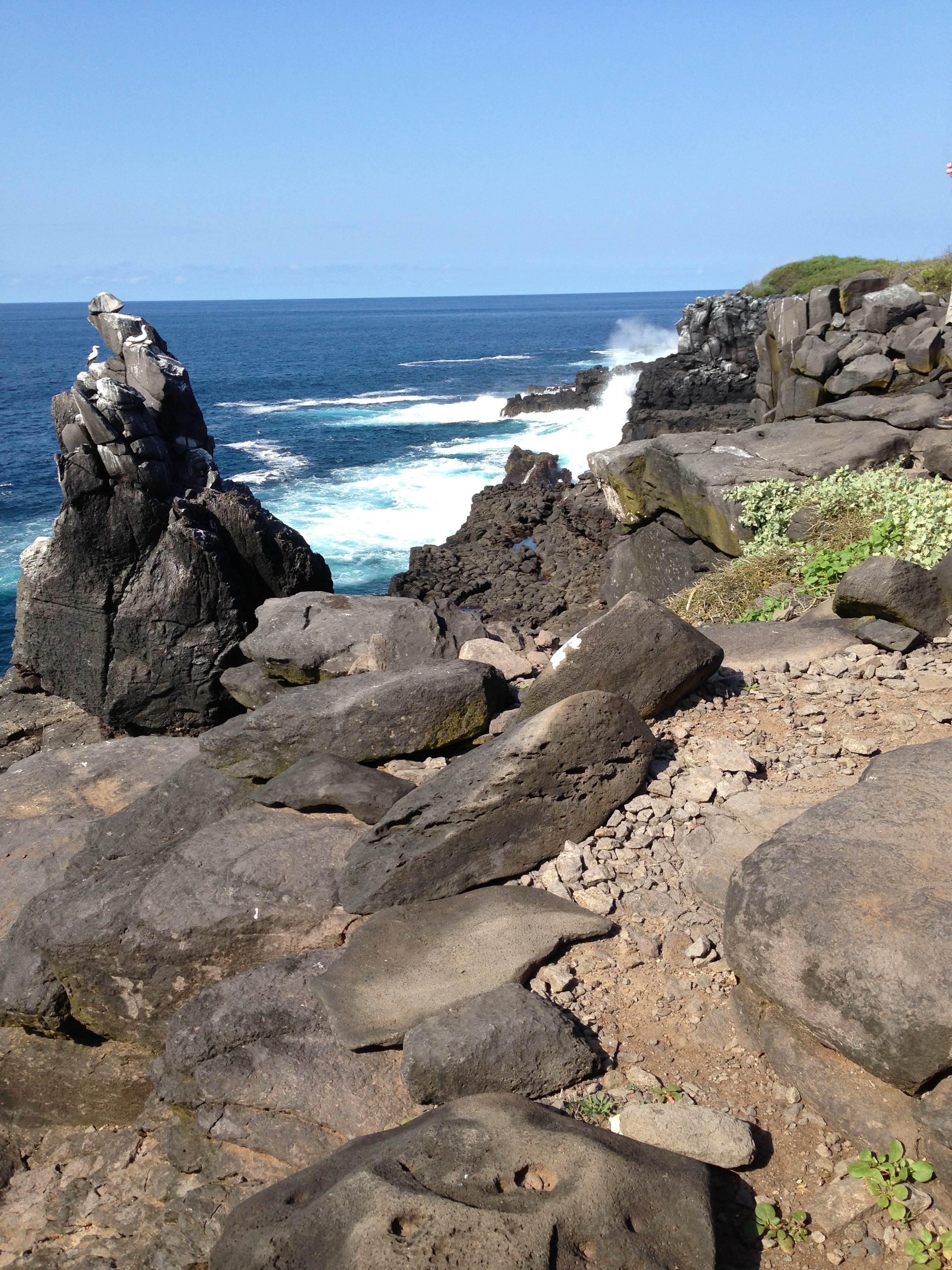
Punta Pitt, San Cristobal - tuff cone formations

Punta Pitt, San Cristobal – tuff cone formations

Blue-footed boobie on Española

Blue-footed boobie on Española

\

Like most places deemed uninhabitable or useless by decent society, the Enchanted Islands began to collect indecent society. Pirates, felons, and women on the run found ways to inhabit the rocks, only to be murdered, run off, or defeated by the odds against survival in one place that would not yield to man’s narrow view of dominion. No one felt their efforts more strongly than the tortoises, who were the only edible game, and were thus hunted to within millimeters of extinction.

Tortoise on Santa Cruz

Tortoise on Santa Cruz

It was not until Charles Darwin stepped onto their shores in 1835 that anyone found something worth taking home: a bag of dead finches.

Darwin’s gaze dignified the islands, and anyone who now gazes at Kicker Rock glowing in the sunset owes to him one of the awesome experiences of her lifetime. And the islands that were of no value to those seeking gold, God, or glory, have become a goldmine to those witnessing the glory of God. Forget the culture wars for one moment and give thanks that we have been freed to love nature for what it is.

Kicker Rock at Sunset

Kicker Rock at Sunset

Cactus finch on Santa Cruz

Cactus finch on Santa Cruz

The Galápagos, in our time, are still not a quiescent subject to the whims and wishes of man. The National Park takes precedence over tourism, agriculture, and commerce. Guides are unapologetic in dishing out the answer we think we can buy our way out of, “No.”

A guide, protecting the sesuvium, where red-footed boobies nest

A guide, protecting the sesuvium, where red-footed boobies nest

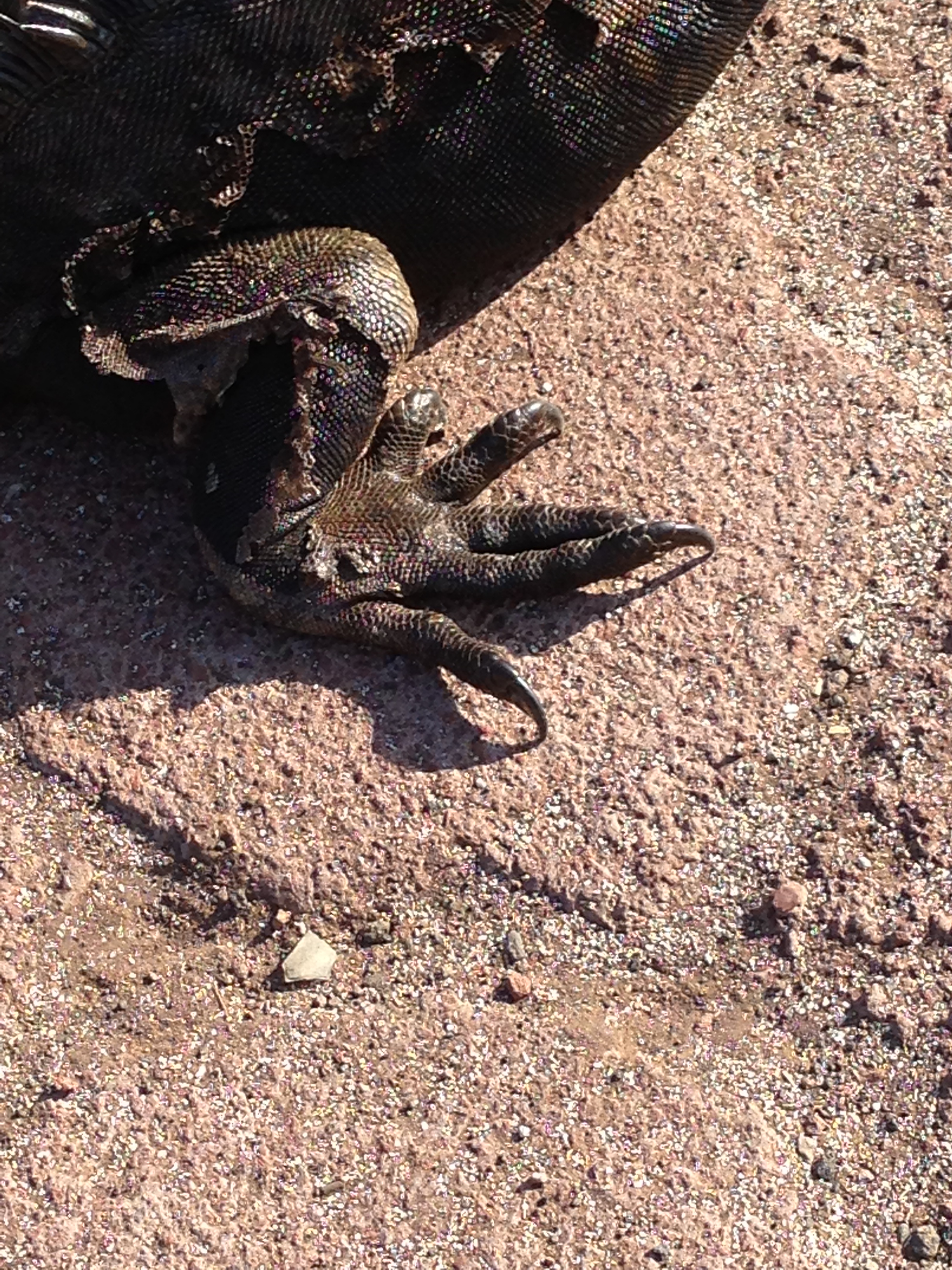
Marine Iguana on Santa Cruz

Marine Iguana on Santa Cruz

Visions of Caribbean luxury are dashed on the tuff cones and chased far away by biting horse flies. Predictability is low where animals are not bated and tamed to earn big tips from schedule-bound tours. The heat is unforgiving in its season, and shade is found in as many places as is fresh water…none.

Marine iguanas of Española

Marine iguanas of Española

Yet, Darwin’s children flock like sea lions to those shores, seeking to understand the processes of nature, and its continual course of becoming. The islands attract those who are intrigued by an isolated ecosystem where predators are scarce and resources scarcer. Those who see a pond covered in sesuvium or a collapse crater and gasp in wonder. Those who marvel at the beaks of finches. There are some hallelujah’s only uttered in the language of science.

Los Gemelos collapse crater on Santa Cruz.

Los Gemelos collapse crater on Santa Cruz.

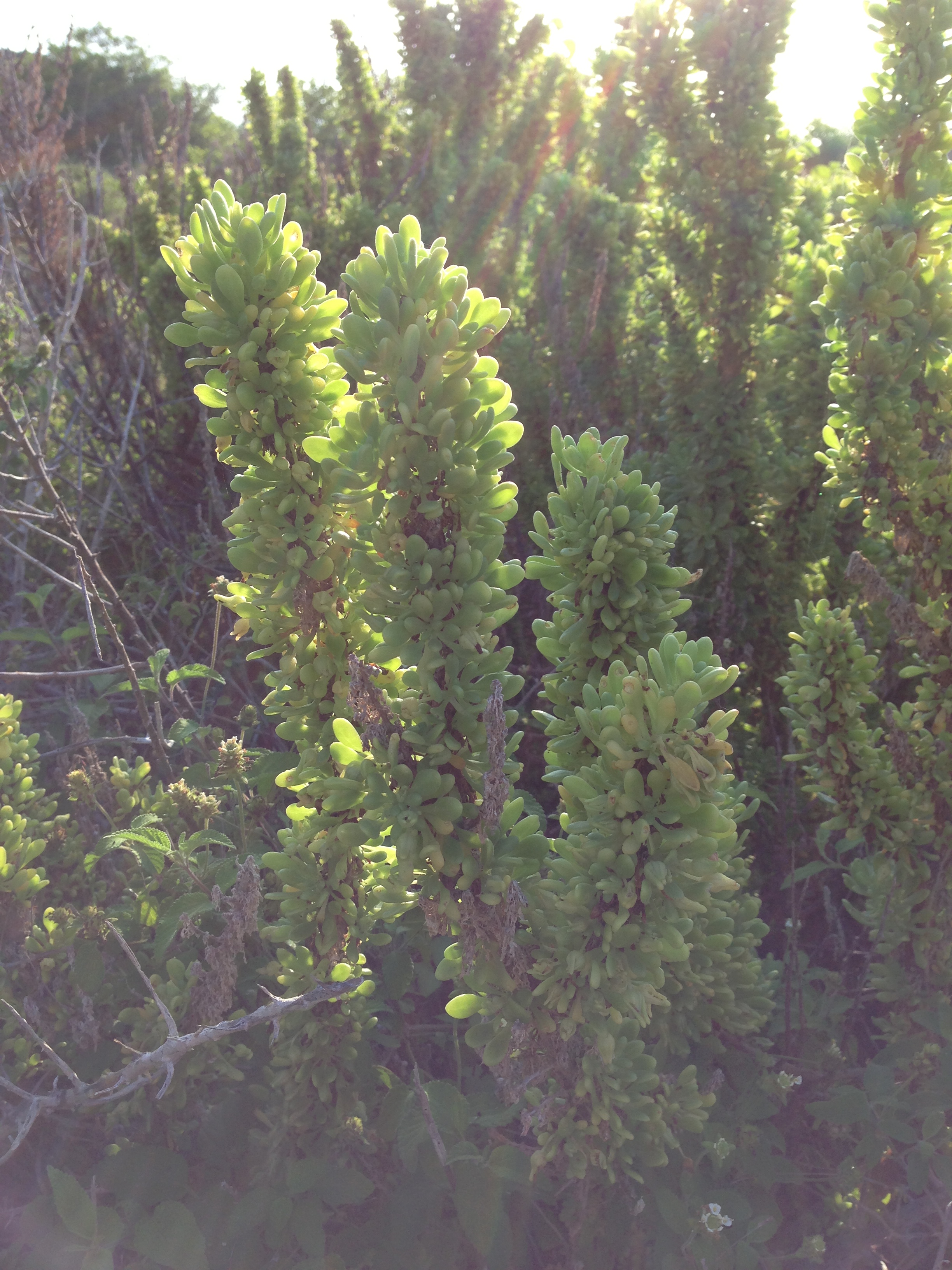
Sesuvium covering a pond on Santa Cruz island where tortoises seek shade.

Sesuvium covering a pond on Santa Cruz island where tortoises seek shade.

And so as much as indignance swells inside me to the rhythm of the waves beneath me, I am also glad. I am relieved that in a moment when we ruined so much, we did not ruin everything. I am relieved that those things which we did not deem worthy of our exploitation have survived to become our treasures. I rejoice for those who did not impose a tax upon every inch of Creation. Those who bound their fortunes to the flourishing of nature.

Española

Española

Baby sea lion on Española

Baby sea lion on Española

The conquistador spirit is alive and well, I know. Standing on the dock while Lonesome George’s remains were escorted by documentary crew off to the Smithsonian, I saw the sad face of the local girl who had grown up in the glow of his renown. She will never be able to buy the plane ticket to go to the Smithsonian to pay homage. She has lost him. Naturalist eyes are not immune to the allure of the spoils.

Lonesome George on his way to the Smithsonian.

Lonesome George on his way to the Smithsonian.

We cannot simply rest in our rapture over the rarity of this place. We must keep advocating, must keep reforming, must keep making those anti-Babel decisions that keep us off of the throne of Heaven. The Galápagos are a place where we can go to remind ourselves that we are not the measure of all things.

Red-footed booby in flight

Red-footed booby in flight

NOTE: for more light hearted detail of our trip, see the Alamo Area Master Naturalist Newsletter article.